

|
|
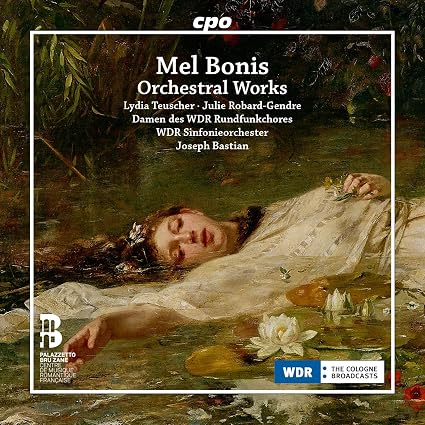
The CPO came first, and I was surprised to discover all of Bonis’ orchestral works can fit comfortably onto just one CD – around an hours’ worth of music in all. I was expecting (and hoping for) more. Nonetheless, I was enormously satisfied with this disc – the music, the orchestral playing, the conducting and the recorded sound. (How often does that happen?!) It’s all pleasant and pleasing, and the recorded sound is glorious. But hand on heart, I wasn’t sufficiently motivated to write up a review, finding the entire body of work to lack a bit of variety and ingenuity. So I decided to wait until the Chandos arrived and make a comparison of the two.
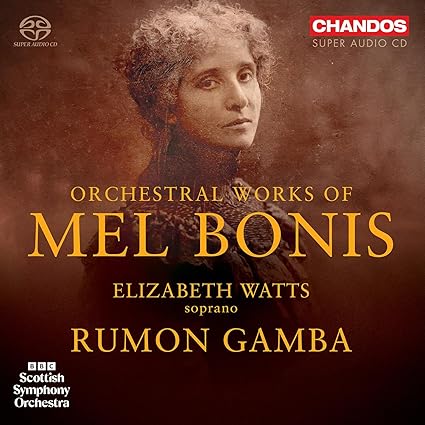
Soon enough the Chandos arrived, and, well, there’s not much to write about even that! The two discs sound virtually indistinguishable – sonically and musically. Both orchestras are warm and lustrous, realistically portrayed within a beautiful, glowing acoustic. And this surprised me – if for no other reason than I expected the Chandos, being an SACD, would sound even better than the CPO, which is a standard CD. But it doesn’t. They both sound positively sumptuous; perfectly suited to this music. Oh if I listen real hard (which I did), there are subtle differences. The Chandos is a tad closer, and more spacious and atmospheric at the same time; while the CPO is touch more sparkling and “present”, but with a flatter perspective. But the differences really are very subtle, and not significant enough to definitively determine a preference for one over the other – except, perhaps, for the avid audiophiles among us. (More on this below.)
Not only the sound, the performances are very similar as well. As are the orchestras. Both display superb characterization of the music’s highly descriptive nature – fully engaged and involved in the musicmaking. (It really is enheartening to hear an orchestra come alive when playing something entirely new to them.) Tempos throughout are remarkably similar from the two conductors – though there are a few minor differences, of course, which I will get into below. Blindfolded, I doubt I could identify either recording without knowing which was which. That is not to say they are in any way anonymous or lacking in character; just the opposite actually. It’s to merely point out how superb both orchestras are – as are their respective conductors. I suppose it would also suggest that this music just is what it is, and unfolds naturally without the need for much interpretative intercession from a conductor. And even more, a testament to Bonis’ skill at orchestration and scoring that her music can sound so remarkably similar and completely satisfying from two completely different orchestras on two completely different recordings.
As to the program content, though the layout and ordering of the pieces differ, they are musically identical – with one tiny exception. CPO adds a very short (2:45) work for chorus and orchestra at the end, Le Ruisseau (“The Brook”). But you might notice that both discs have the same number of tracks – 16. So how can that be if the CPO has an extra piece? Well it’s simple. Chandos splits up one selection into 2 tracks, while CPO combines them (the 2nd section of the Suite of Valses, which contains an Interlude and the 2nd Valse – which Chandos tracks separately). Thus Chandos (perhaps intentionally) appears to offer the exact same amount of music as CPO. But it is ultimately inconsequential. However, I do like that CPO confines all 3 vocal/choral works to the end of the program, so you can easily turn it off before they start if you want to; while Chandos inserts one soprano work unexpectedly into the middle of the program where you least expect (or want) it.
Both collections begin with Bonis’ most ambitious and important work(s), Trio Femmes de Legend (literally “Three Female Legends”), comprising three separate tone poems. These were originally piano works, never published in her lifetime. They were orchestrated while she was studying with Charles Koechlin in 1908/09. There was also a 4th legend in the original piano set, “Omphale”, but unfortunately they never finished scoring it. It’s a pity neither of these conductors saw fit to have it orchestrated and included here. (Maybe the manuscript has been lost?) But what we have is positively glorious.
I was familiar with these 3 legends from a 2023 la dolce volta collection entitled Poetesses Symphoniques, conducted by David Reiland, which I reviewed in October 2024. I loved the music then, noting it was the standout of that entire collection. I also commented on how I heard a lot of Rimsky-Korsakov in its orchestration. And I now wonder if that was something Reiland brought out in these scores or if Bonis really had been influenced by the master. (Or had I just imagined it at the time?)
This music is seductive and heady – richly impressionistic and sumptuously scored. Interestingly, the order in which they are presented on these 2 new discs differs from one another (for unspecified reasons). Bastian matches Reiland, while Gamba does his own thing. So I’ll go with how CPO has them – beginning with the longest of the three (8 minutes), “The Song of Cleopatre”, which occasionally brings to mind Richard Strauss and Szymanowski, adorned with colorful harmonies and resplendent orchestration. Does it sound like Rimsky-Korsakov here? Oh there is some glittering woodwind writing which brings to mind Rimsky’s suite from The Invisible City of Kitezh, for instance, but the overriding flavor is of French perfumed atmospheres more reminiscent of her teacher, Koechlin, than Rimsky.
I thought “Ophelie” was even more Rimskian in Reiland’s hands (specifically the melodramatic brooding of Le Coq d’or suite). Now…not so much. It’s more sensual, like Salome, and certainly more impressionistic than anything Rimsky wrote. I’m not sure why I was hearing Rimsky-Korsakov in the earlier recording; maybe I just had him on my mind for some reason.
“Salome” is sensuous and spirited – actually more rousing than I had remembered. And the glimmers of Scheherazade I heard in the earlier reading definitely are here in Bastian’s as well. (Aha!) But then I thought Gamba brought out more of a Debussy influence. Either way, this isn’t as overtly sensual as Strauss’ famous Dance of the Seven Veils. Bonis’ Salome is more sultry, provocative and seductive in the most alluring way. And the music really gathers momentum as it goes, culminating in a passionate climactic section near the end before becoming seductive again to end it. I like that Bastian’s (and Reiland’s) set of legends ends with this, rather than it coming in the middle, as on Gamba’s. (Gamba concludes with Cleopatre.)
Both performances here are glorious, and both orchestras are opulent with an impressionistic glow. Identifying differences between the two is difficult. Only in “Ophelie” do tempos differ at all, with Gamba adopting a slightly more flowing tempo, and Bastian just a little more leisurely – though you’d hardly even notice it without looking at the track timings (4:31 vs 5:00). But I did come away with a slight preference for Gamba overall, especially in Cleopatre, where the Scottish Symphony’s strings are just a bit more sumptuous than their WDR counterparts, and the Chandos sound a bit more atmospheric than the CPO. The combination makes the piece that last bit more alluring and intoxicating. But only just.
And a quick comparison with the earlier recording from Reiland reveals his readings to be very similar to both newcomers – and certainly their equal in every way. And the la dolce volta recorded sound is also excellent. Other than a touch of tubbiness (especially the drums), it is just as sumptuous as the newer ones. What a treasure trove of riches we have with 3 absolutely glorious recordings of these wonderful pieces!
These are Bonis’ most substantial and substantive orchestral works, lasting just over 17 minutes in total. I love how they combine rich, colorful Romanticism with rapturous atmospheres and impressionistic textures. They are unique and distinctive – expertly crafted, imaginative and creative, musically alluring, and superbly orchestrated. Bonis was apparently a quick learner during her brief time studying with Koechlin – or, more likely, was already highly accomplished in such matters and he simply helped hone her skills.
The rest of Bonis’ orchestral works are essentially a series of short dances – little miniature gems at which she excels, not unlike how some authors are so adept and successful at writing short stories rather than novels. Though it must be admitted this is where a certain sense of sameness in temperament, flavor and style tends to set in. There are two movements (Prelude and Danse) from Suite Orientale – which originally consisted of 3 movements for piano, violin and cello. And again, what a pity neither production took the initiative to have the 3rd one orchestrated for inclusion here. But these are certainly pleasant and interesting. Somewhat more substantial is the Suite en forme de valses (3 waltzes plus an Interlude in the middle) and Danse sacree, which was published in the same series (though it’s not a waltz). Each of these lasts 2-3 minutes, as does each of the Trois Danses – a Bourree, Pavane and Sarabande.
Again, differences between the two conductors are subtle and musically inconsequential – with the possible exception of the final scherzo-valse in the Suite of Valses, which dances more vivaciously at Gamba’s quicker tempo. Throughout, both conductors relish the colorful orchestration and find as much variety in the music as there is to be found. To my ears, both are equally effective and completely satisfying, and as noted before, there is not much of significance to choose between them.
Oh, and then there are the 2 vocal works thrown in for good measure for those who are interested in that kind of thing. And don’t forget the CPO concert closes with the aforementioned short choral work, which makes for a lovely conclusion to a lovely evening of music.
For someone looking for a single recommendation, I would be hard pressed to suggest one over the other. If you have an SACD player, then the obvious choice is the Chandos. Otherwise, I’d be just as happy with the CD from CPO and would probably buy whichever one is less expensive. For the avid collector such as myself, I had to have both. Not only was I very interested in this composer, I was very interested in comparing the two recordings. And best of all, it afforded me the opportunity to listen to this music twice. And it was equally rewarding both times.
In the overall scheme of things, this music may not be monumental in the history of forgotten composers, but I loved it nonetheless. And I admire Bonis’ presumed understanding (and acceptance) of her limitations and skillset by focusing on miniature gems like these rather than trying her hand at anything overly ambitious. As this represents her entire orchestral output, I sincerely hope one (or both) of these enterprising record labels will dedicate more resources to this composer and follow up with some recordings of her chamber music in the immediate future.


%20Graham%20Boulton.jpeg?w=160&resize=160,160&ssl=1 "Celebrating John Joubert at Royal Birmingham Conservatoire in advance of his 2027 centenary")