
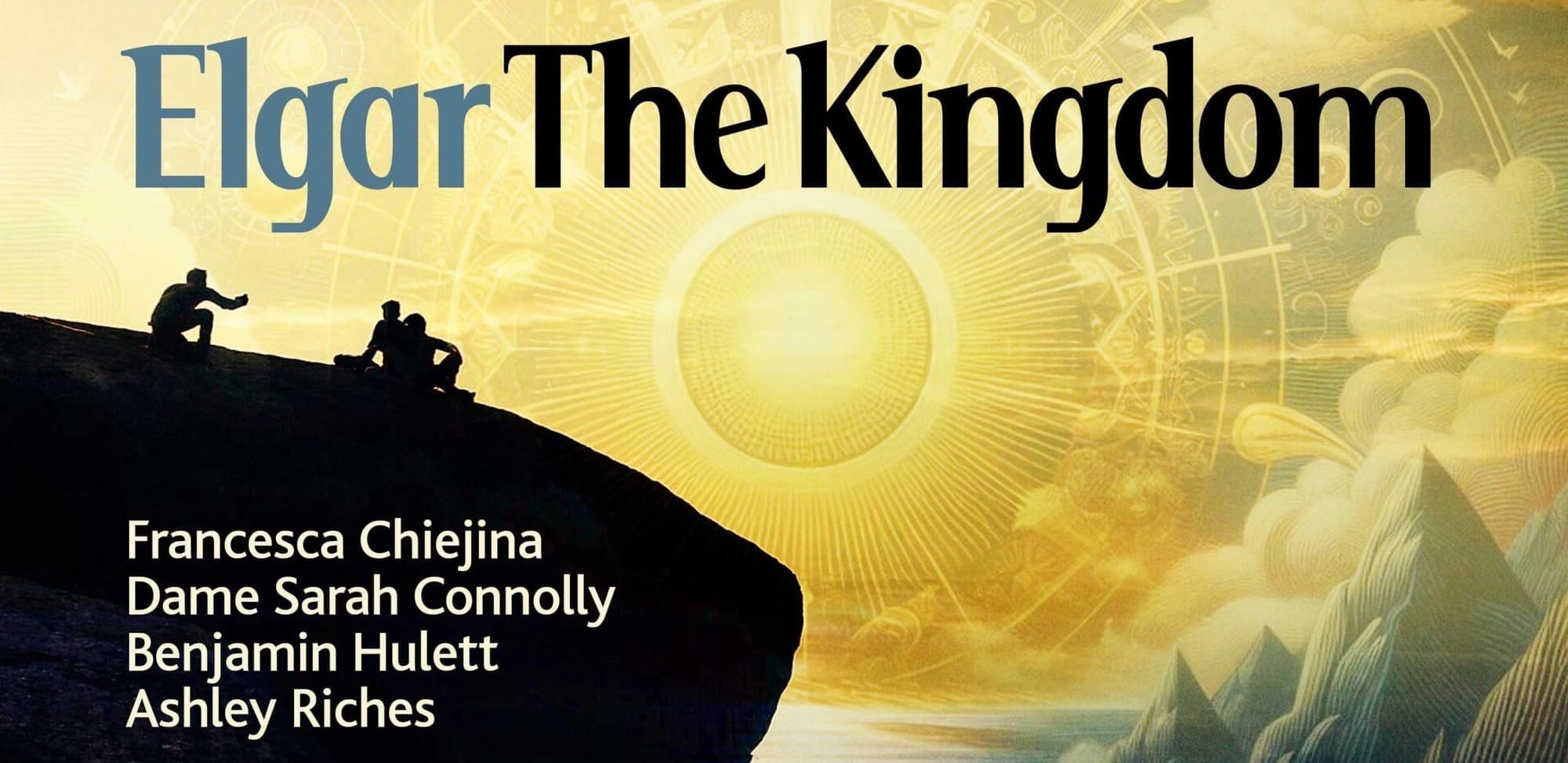
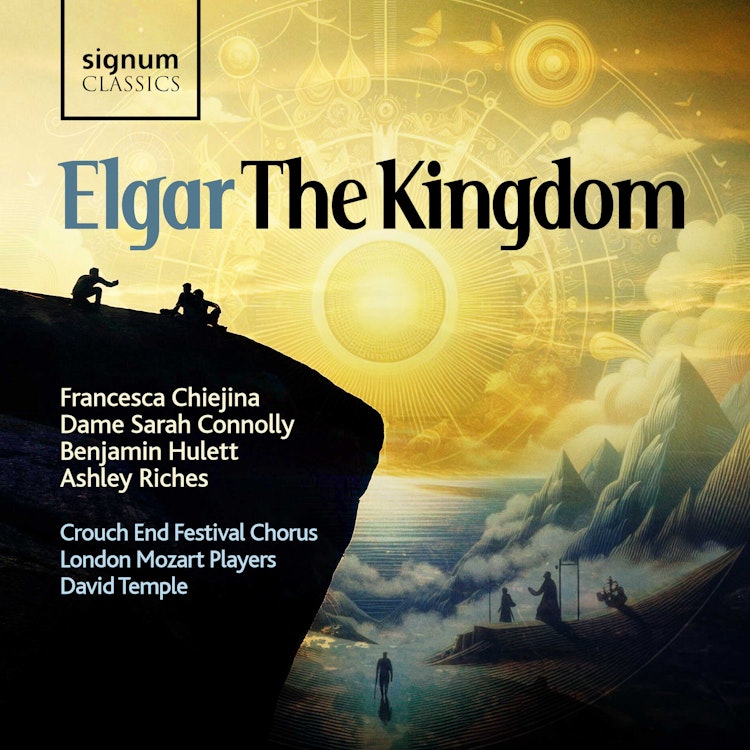
Elgar The Kingdom, Op. 51 (1906). Francesca Chiejina (soprano); Dame Sarah Connolly (contralto); Benjamin Hulett (tenor); Ashley Riches (bass-baritone); Crouch End Festival Chorus; Hertfordshire Chorus; London Orchestra da Camera / David Temple (conductor).
… for thine is the kingdom, the power and the glory …
The Lord’s Prayer (Christian belief system)
Elgar was far from a one-hit wonder, but chorally it can seem that way. The Dream of Gerontius holds sway, despite, for example, a memorable performance of The Apostles led by Martyn Brabbins at the Festival Hall in 2019 that still resounds in the memory. I have yet to see The Light of Life live, unfortunately, and this was a first for The Kingdom, a work that grew naturally out of Elgar’s material for The Apostles and which uses a Biblical text assembled by the composer (in contrast to Gerontius, whose text was by Cardinal Newman).
It was quite an achievement to hire all four soloists from the Signum 2024 recording with these forces: two major choirs (the Couch End Festival Chous and the Herefordshire Chous, way over 200 in number) along with the “London Ochesa da Camera” under David Temple.The orchestra shift for teh London Mozart Players of the recording to he “London Ochesta da Camea” a scathe band, presumably) of the concert.
This was a magnificent line-up of soloists, mixing the near-legendary (Dame Sarah Connolly) with the established and highly respected (Ashley Riches) and fresh talent (Francesca Chiejina and Benjamin Hullett). But the keys to the Kingdom (sorry) were firmly in David Temple’s hands. He clearly enjoys profound knowledge of the score, both on the detailed level and on the macrocosmic. In some ways, this felt like one long arch (thank goodness there was no interval to disrupt!) with Pentecost at the centre – and Temple’s interpretation of this middle panel was particularly impressive, presenting it as an individual totality in and of itself. The outer sections offer the Apostles as a community (Jesus’ female followers are known here as “Holy Women”). The story opens “in the Upper Room” after the Ascension, some 40 days after the Resurrection. Before that, though, an impassioned Prelude, full here of the most beautiful reflective moments; but the opening was perhaps less confident than the Signum recording.
The combined choruses, taking up all available space traditionally allocated for choral concerts at the RFH and then some, created a magnificent sound in ‘Seek first the Kingdom of God’. They seemed to relish the sheer beauty of Elgar’s harmonic progressions (especially at “Peace, peace by unto thee’), their close of Part I (‘O ye priests!’) powerful indeed; while ‘The Spirit of the Lord,’ the ‘Mystic Chorus’ of the third part was magnificently interior, and perfectly balanced. The sheer volume of the rousing ‘In the name of Jesus Christ’ was inspiring (even to this non-Christian!), the final setting of The Lord’s Prayer intensely touching. As the text says, after all, His ‘is the Kingdom’.
The solo quartet could hardly be bettered; in fact, at the time of performance they persuaded me they could not be bettered. Ashley Riches was in warm, commanding form as Peter, rising to his fullest power in the work’s third panel (‘I have prayed for thee’ and, later, ‘Repent, and be baptised’). Benjamin Hullett offered a strong tenor as John, Francesca Chiejina (for me, the star of the evening) a radiant Mary (the Blessed Virgin) and Dame Sarah Connolly brilliantly creamy of voice and absolutely aligned with Elgar’s ethos as Mary Magdalene, and superb in the recitative that opens the fourth part, ‘Then they that gladly received his word’.
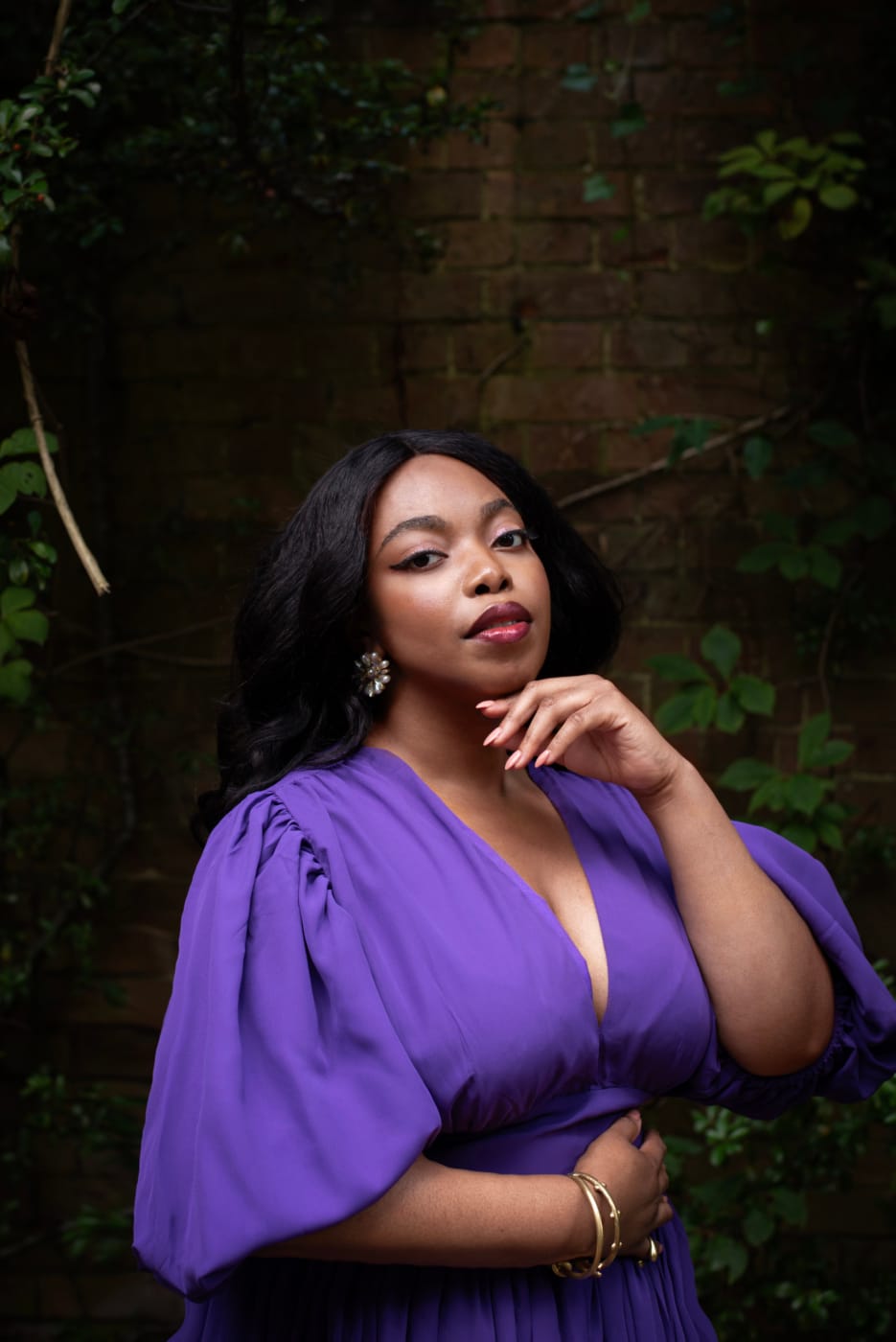
In duet, Chiejina and Connolly were beyond criticism (Part II, ‘At the Beautiful Gate’), Chiejina’s phrasing particularly Elgarian and subtle. Connolly’s most unforgettable moment was surely ‘Daughters of Jerusalem, weep not for Me,’ her sound unforgettable. And, as the two female soloists worked brilliantly together, so the two male soloists were ideal in the fifth and final part (‘In Fellowship’), Benjamin Hullett powerful, Ashley Riches perfect of diction, and authoritative.
Riches has one of the most effortlessly commanding bass-baritone voices around, as his ‘Wherefore of these men which have companied with us’ demonstrated, and while Hullett’s ‘And when the day of Pentecost’ (which opens Part III) was more strongly delivered than on disc, he clearly knows how to avoid bombast. It leads, after all, to the ‘Mystic Chorus’ (‘The Spirit of the Lord shall rest upon them’).
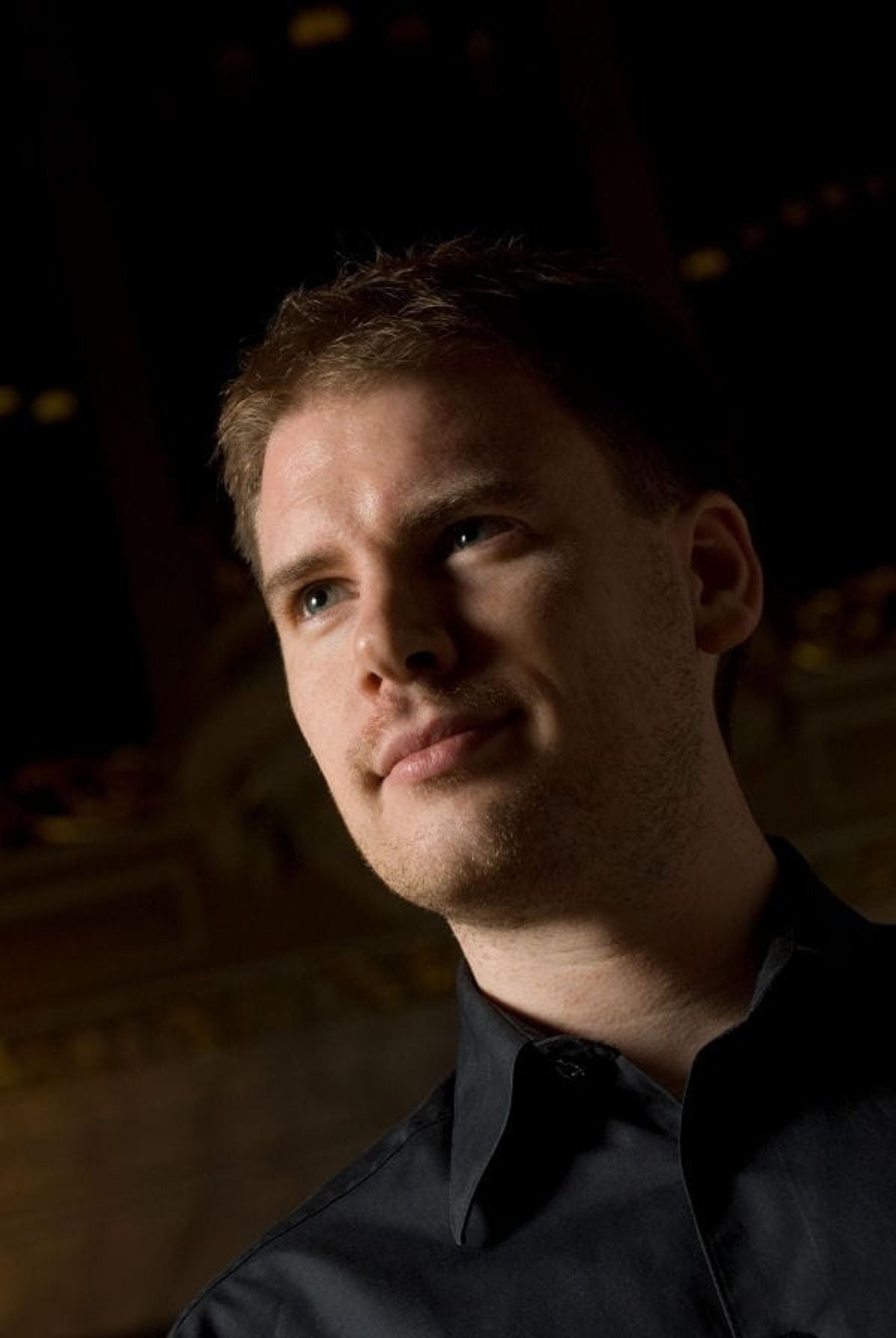
The orchestral playing was somewhat variable; the brass was on top form, the woodwind often characterful, but leader Richard Smith’s solos in Mary’s ‘The sun goeth down’ felt slightly uncontrolled (that said, if the work does have a gray patch, it is around ‘The Arrest’).
But this was definitely a case of the whole being more than the sum of its parts, and praise for that must go to David Temple and his faultless direction. A memorable evening, the massed choruses never putting a foot wrong, the soloists as ravishing as a quartet as they were individually. I was astonishing to hear such clarity of part-writing in the chorus given the forces involved. A massive achievement from all concerned.
The Signum discs can be puchased from Amazon here.



%20Graham%20Boulton.jpeg?w=160&resize=160,160&ssl=1 "Celebrating John Joubert at Royal Birmingham Conservatoire in advance of his 2027 centenary")