


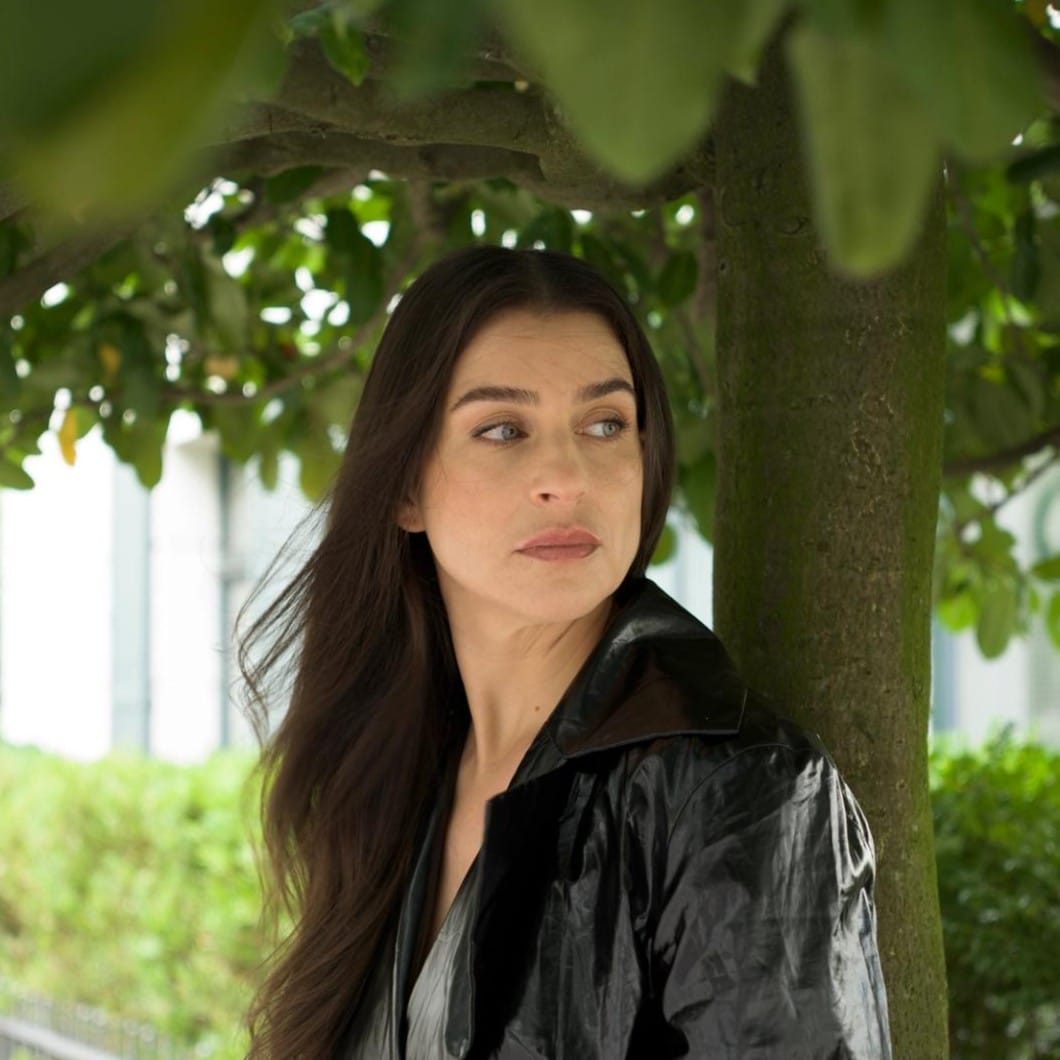
Asmik Grigorian and Lukas Geniušas at Wigmore Hall
The Wigmore Hall’s 125th Anniversary Festival is shaping up well: in one day, the venue offered Jordi Savall at lunchtime and Asmik Grigorian in the evening, both (as far as I could see) all but sold out.
Performing with regular musical partner Lukas Geniušas (with whom she has recorded successfully), Grigorian offered the inspired idea of a wordless first half. Three Vocalise-études, a Vocalise and some Bizet piano music to break it all up. This, contrasted with Richard Strauss’ glorious settings of Hesse and Eichendorff in the Vier letzte Lieder, with two Strauss songs in glorious (almost) conclusion: Zuegnung, and Cäcilie.
How the Ravel Vocalise-étude en forme de habanera (1907) enchanted, the misty habanera rhythm always present at some level, Geniušas has a fine touch and great clarity (both pre-requisites for Ravel); and how clean Grigorian’s slurs. Together, the effect was far more than the sum of its parts. Fauré’s Vocalise-étude of the preceding year is very different: longer lines, more fragranced, warmer (this last reflected in Geniušas’ tone). The composer asks for a wide vocal range here, too (no problem for this singer).
Reynaldo Hahn’s Vocalise-étude is, like almost all of this ravishing composer’s output, under-appreciated (and the catalogues seem to show this particular piece is mostly requisitioned by instrumentalists – who are, after all, wordless). Still, hearing it with voice was a privilege, the harmonies warm and rich, Geniušas’ chords expertly spread.
The piano music of Georges Bizet is massively under-appreciated: I note the 16-CD Warner/Erato George Bizet Edition includes only music for piano four hands and no solo. Published by Heugel in 1886, the Chants du Rhin is a set of six miniature, of which we heard four (the first three, “Aurore,” “Le départ” and “Les rêves,” and the final “Le Retour”). The first, “Aurore” (C major) features a dreamy melody; Geniušas’ legato could have been more silken, but the piece charmed nonetheless. “Le départ” (I don’t think we can make parallels with Beethoven’s “Les Adieux” here!) is interesting. Cast in E Major and marked Andantino quasi allegretto, the opening is like a major-mode version of the opening of Beethoven’s Op. 2/1, but put to very different use. Marked “Bien rhythmé,” it bustles deliciously (I did write in my notes, “Is this a train?” though). The dialogue between treble and bass was beautifully done, though. Off to D flat Major for “Les rêves,” richly sonorous at the Wigmore. There is a repeated dyad (often a whole tone) that Geniušas seemed to link to Chopin’s “Raindrop” Prélude, interestingly. He also shaped the piece well before the final “Le retour,” again D flat Major but now chattering away through inner-voice offbeats. A fabulous choice pf repertoire.
Grigorian returned for Messiaen’s 1935 Vocalise-étude, rather nicely applauding Geniušas when she arrived. Messiaen’s piece is gorgeous, heady, almost erotic. The piano and the voice are very much equals here, Messiaen’s characteristic sonorities fully appreciated by Geniušas, with Messiaen’s vocal line seemingly endless (and no problem for Grigrorian). Finally, Rachmaninov’s Vocalise-étude. Back in the 2023/4 season, Grigorian and Geniušas gave a recital of Rachmaninov and Tchaikovsky (still freely available online here). The solo items revealed what a keen, natural Rachminiov player Geniušas is; and how that came across in the Vocalise; Grigorian, too, the two in deep dialogue.
In her disc Laws of Solitiude, Grigorian pitted the orchestral version of the Four Last Songs against the piano. I assume we heard the Max Wolff version they recorded, published by Boosey. Geniušas was superb in the opening of “September” (the first song in this ordering) warm, clear. Grigorian’s voice flew, the two landing perfectly at “Sommer lӓchelt” (Summer smiles). The “horn solo” (for such it is with orchestra) was lovingly delivered on piano. “Beim Schlafengehen” is dark in the orchestral garb; shorn of the cushion of strings, it is even more so with piano. How Grigorian almost narrated the opening (“Nun der Tag mich müd’ gemacht”). Interesting how the piano, in Geniušas’ hands, sounded so idiomatic; Grigorian’s legato was not interesting, though, rather it thrilled while it caressed the soul. And how she opened up in the song’s later stages, offering contrast to the lower-pitched grumblings that open “Frühling” (echoing the twilight of “dämmringen grüften”). And how well Grigorian placed Strauss’ setting often final stanza, “Du knesset much wieder” (You recognise me once more).
True the piano can never match the sheer glow of an orchestra at the opening of “Im Abendrot” (At Sunset), but Grigorian and Geniušas offered the longer game, a hymn to Nature that flowed beautifully.
Again, some lesser-known piano music was offered as part of the menu: three pieces from the Op. 9 Stimmungsbilder (1882-4). The first, “An einsamer Quelle,” includes a difficult rhythm: difficult in the sense that it can sound a bit like a stutter. Geniušas largely succeeded in avoiding this, but the whole felt a bit lumpy. The “Intermezzo” (No. 3) could not be anymore Straussian, and Geniušas played up its playful nature. Lovely to end with Strauss’ “Träumerei,” the fourth of the set, its opening gesture so Straussian in its harmonic twist of the knife. Geniušas’s part-writing was as fine as his chord placement.
So, back to Strauss song (and more applause from Grigorian to her pianist on arrival). Those of us of a certain age may find it difficult to extricate the last two songs (and the encore) from the great Jessye Norman (who not only recorded them but sang them in concert in London): “Zueignung” and “Cӓcilie,” with the bonus of “Morgen”. “Ja, du weisst es, teure Seele” is the first line of Hermann von Glim’s poem “Zueignung” (Dedication): “yes, dear soul, you know,” and Grigorian knew, too: this was highest rank Strauss, and almost ecstatic “Und du segnetest den Trank” (and you blessed that drought). “Cӓcilie” is a close relative to “Zueignung,” and Grigorian and Geniušas ensured a perfect sense of flow throughout.
The audience was itself ecstatic, and what else to offer as encore? Strauss’ radiant “Morgen”. Grigorian made this her own, focusing on the magic at “Stumm” (“Stumm werden wir in die Augen schauen”: Speechless we shall gaze into each others’ eyes). Magic: there was so much to admire in this evening recital.
Ravel – Vocalise-étude en frome de habanera.
Fauré – Vocalise-étude
Hahn – Vocalise-étude (Souvenir de Constantinople)
Bizet – Chants du Rhin (excerpts, piano solo)
Messiaen – Vocalise-étude
Rachmaninov –Vocalise, Op. 34/14
R. Strauss – Vier letzte Lieder. Stimmingsbilder, Op. 9 (excerpts, piano solo). Zueigning, Op. 10/1. Cӓcilie, Op. 27/2. Encore: Morgen!, Op. 27/4.
Asmik Grigorian (soprano); Lukas Geniušas (piano)
Wigmore Hall, London, 26 May 2026


%201280x720.png?w=160&resize=160,160&ssl=1 "The Continuo Foundation awards £108,000 in its 12th round of grants")