

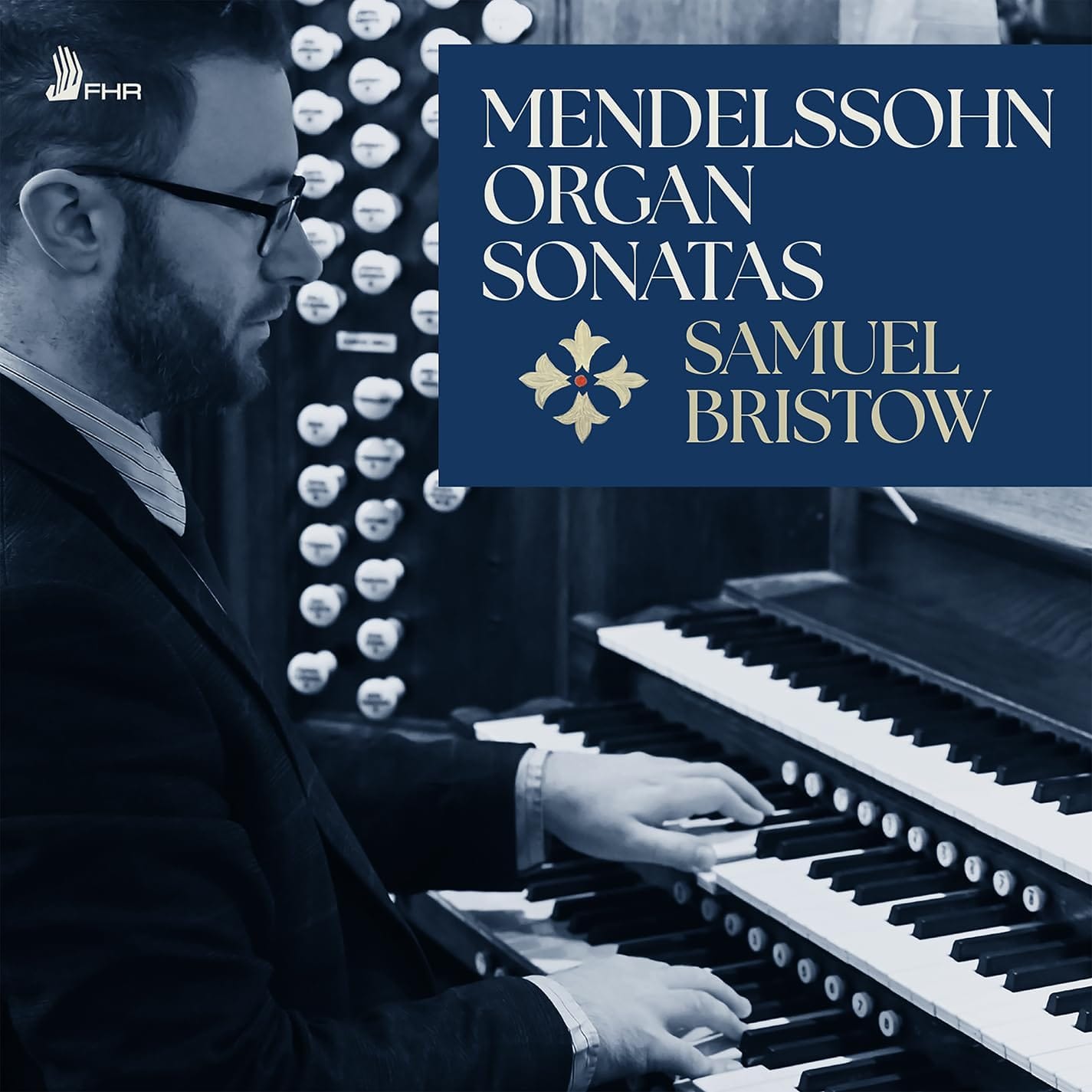
The organs (Nave and Chancel) at Chelmsford Cathedral sound magnificent courrttesy of the artistry of Samuel Bristow in this reminder that Mendelssohn isn’t just A Midsummer Night’s Dream.
Here’s a YouTube of excerpts from each, to give you an idea:
And indeed the organ sounds magnificent in the bold opening of the F-Minor Sonata. These sonatas, Op. 65, sit at the summit of Mendelssohn’s organ writing (he started at the age of 11, with a Prelude in D minor:
Tzvetanka V. Spruck on the Göckel organ at the Catholic Parish Church of St. Michael in Velbert-Langenberg.
It is though the Op. 65 Sonatas that are seen as the culmination of Mendelssohn’s organ output. Amusingly, they came in response to a commission from the English publishers Coventry and Hollier for a series of voluntaries: Mendelssohn provided sonatas, admitting he wasn’t sure what a voluntary actually was. But he did know what a sonatas was – these are remarkable works. Listen to the drama and sheer contrasts in the Andante recitativo of this first sonata:
The fugue of the first movement is played on the chancel organ; the chorale interjection are played on the nave organ. The fugue is based on a tenor recitative from the Matthew Passion, “O Schmerz”:
with the Stuttgart Chamber Orchestra, conducted by Karl Münchinger,
The culminating finale is magnificent, and heard in the finest of organ recordings here (David Jones, Sonus Audio):
The Grave-Adagio that opens the Second Sonata (C minor) is beautiful – as the notes, say, a Lied ohne Worte:
In stark contrast, the Allegro maestoso e vivace is the brightest of marches, a reworking of a Nachspiel in D-Major of 1831, and how Bristow captures this sense of celebrational majesty:
Bernhard Schneider an der Klais-Orgel von St. Aegidien, Braunschweig
… the fugue that follows, follows naturally, and is a magnificent example of its type, Bachian rigour married to early Romantic sensibility, Bristow takes it to a rousing, crowning conclusion:
The Third Sonata’s first movement was actually originally a wedding march written for the composer’s sister, Fanny. Luckily, it’s in A-Major (Con moto maestoso); the march cedes to a simply stunning double fugue, the first subject based on the recitative “Hüter, ist die Nacht bald hin?”; Watcher, will the night soon pass), while the pedals sound the chorale, Aus tiefer Not schrei ich zu dir (from deepest pain I cry to thee). The extensive movement (7″10) is becalmed by a concluding (there are only two movements) Andante tranquillo:
The Fourth Sonata returns us to the four movement format but retains a major modality: B flat, this time. All credit to the recording for maintaining detail and clarity – this is a tricky, texturally active movement (“pianistic,” as the artist’s own excellent notes call it):
One of the most beautiful movements in the entirety of Op 65 is the Andante religioso, followed by a duet between soprano and tenor lines in the Allegretto, heard against a gentle moto perpetuo:
A rousing finale sounds the sonata off, despatched with notable virtuosity by Bristow. The Fifth takes us to D-Major, opening with an chorale Andante, followed by a Song without Words and a blazing finale, full of irrepressible joy. Bristow’s strong fingerwork is exemplary:
Finally, the Sixth Sonata, which beings with a first movement that takes Vater unser im Himmelreich (Our Father in Heaven – a paraphrase of the Lord’s Prayer, Martin Luther) as the foundation for variations, with each variation corresponding to a stanza of the text. Here’s the chorale, as set by Bach (with a short score) followed by Bristow’s performance of the Mendelssohn – which finds Bristow responding to the composer’s virtuosity in kind:
This is a chorale that has been set by many, of course. Georg Böhm’s (1661-1733) setting I find particularly interesting and charming, performed here by the Castillian organist Jesús Martín Moro:
… while Johann Ludwig Krebs (1713-80) offers this skilful take, performed here by Walter Gatti in May 2019, in Torre Pellice (Italy):
(from Krebs’ Clavierübung)
Back to Mendelssohn – a restrained sostenuto e legato fugue (the subject is both, here, and is based on the same chorale as the first movement), magnificently constructed, before a finale blessed with complete serenity. Bristow finds the perfect tempo, so it flows, contentedly:
Bristow is Assistant Director of Music at Chelmsford Cathedral, a post he has held since September 2023. He has performed the complete organ works of Mendelssohn at St Paul’s while an Organ Scholar there.
This disc is available at Amazon here, iDagio here, other streaming below.