


George Enescu, in October 1888, aged seven, become the youngest student ever admitted to the Vienna Conservatory (and the first non-Austrian), from which he graduated at the age of twelve. Quiet a precocious child, then.
In addition to his career as a composer, Enescu was also an acclaimed conductor and violinist. He made his American début in 1923 conducting the Philadelphia Orchestra, and frequently conducted both the New York Philharmonic and the Orchestre symphonique de Paris. Enescu made numerous recordings as a violinist, of his own works and those of others: his 1949 recording of Bach’s Sonatas and Partitas was very highly regarded, and as a teacher (at the Mannes School of Music, in New York) his students included Yehudi Menuhin, Christian Ferras, Ivry Gitlis, Arthur Grumiaux, and Ida Haendel, among many others).
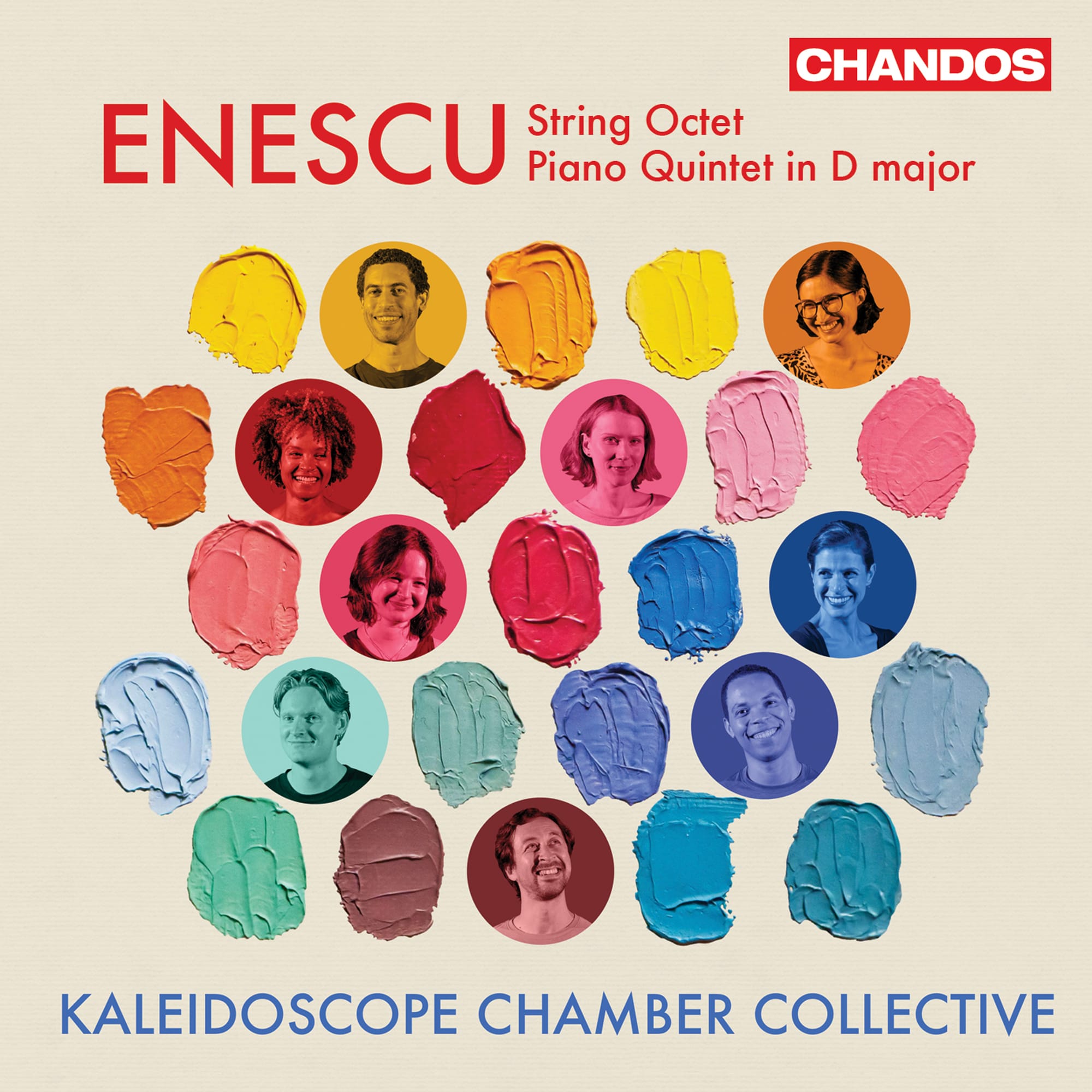
Here’s a taster for this new album of chamber music by the Kaleidoscope Collective:
The Octet (1899-1900) in C-Major, Op. 7 for four violins, two violas and two cellos was written while Enescu was still a teenager. It was premiered, with Enescu conducting (!) a week before Christmas 1909. It begins with a bold statement in a modally-flavoured C-Major, but is actually filled with lyricism. The composer himself write that:
I wore myself out trying to make work a piece of music divided into four segments of such length that each of them was likely at any moment to break. An engineer launching his first suspension bridge over a river, could not feel more anxiety than I felt when I set out to darken my paper.
Explaining the work. Enescu said:
This Octet, cyclic in form, presents the following characteristics: it is divided into four distinct movements in the classic manner, each movement linked to the other to form a single symphonic movement, where the periods, on an enlarged scale, follow one another according to the rules of construction for the first movement of a symphony. Regarding its performance, it is to be noted that too much emphasis should not be given to certain contrapuntal artifices in order to permit the presentation of essential thematic and melodic elemental values. This work can be played with a full string orchestra on condition that certain cantabile parts be entrusted to soloists. I leave it to the judicious choice of the conductor to decide which passages are to be played solo.
There is an intensity to the first movement that is perfectly conveyed here. And for all the composer’s entreaty that counterpoint should not be underlined, it remains a vital component:
Enescu writes the gamut of string octet texture into that movement, from full-on complexity to string quartet-like transparency. A Scherzo follows, marked “Très fougeux” (very fiery) . Once more, intensity prevails as material from the first movement returns in juxtaposition with the new. The slow movement is the piece’s heart, though, The music is exquisite – why don’t we hear this more often in the concert hall (it is quite well represented in the catalogues, though – see below). There is a touch of the slow movement from Schubert’s String Quintet about the first violin melody against pizzicato bass. An “animé” section flows beautifully, intterrupted by a most expected sequence of recitatives:
The finale is replete with remarkable textures – a waltz, but a heady one (perhaps an Enescu-flavoured, more gritty Ravel La valse). The ending is as emphatic as they come:
Chandos has released the string orchestra version of this piece under John Wilson with the sinfonia of London (coupled with Ysaÿe’s Harmonies du soir and Bacewicz’s Concerto for String Orchestra). There is a phenomenal performance led by Vilde Frang and friends (coupled with Frang as soloist in Bartók’s First Violin Concerto), while ROctet on Challenge has the most appealing, remarkable couplinhs: Respighi’s Double Quartet, and Theo Leovendie’s Changes. The obvious coupling, Mendelssohn’s Octet, is offered by the combination of the Gringolts Quartet and Meta4 on BIS. There is also another Chandos, which has been exceptionally well received: the Academy of St Martin-in-the-Fields Chamber Ensemble.
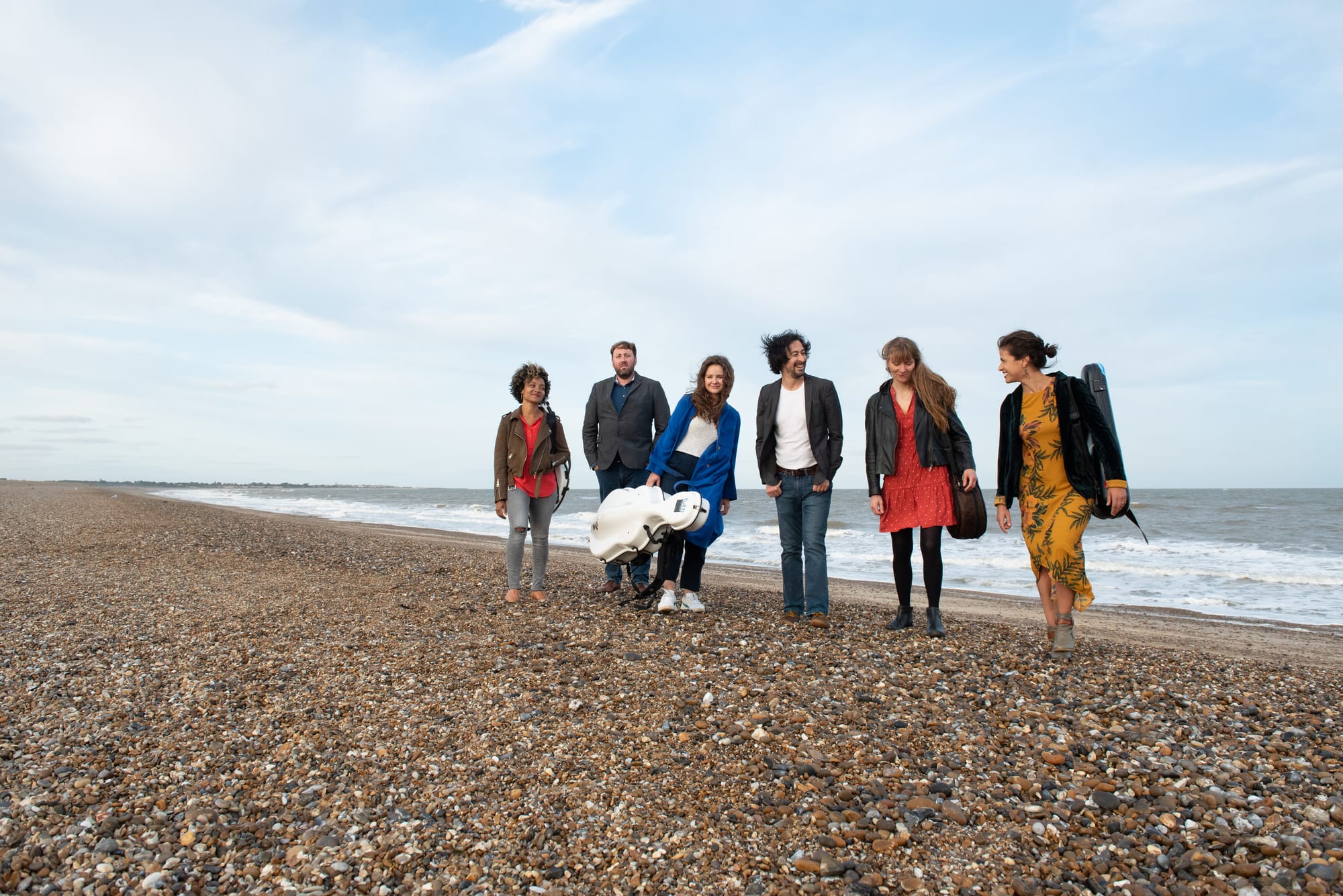
It was good to hear Tom Poster as one of six pianists in the London Piano Festival’s Mozart Gala recently. Here, he is pianist in Enescu’s Piano Quintet is an early work (1896,. probably) cast in D-Major and very different from the Octet – notably Brahmsian, in fact. That composer was Enescu’s idol (it is said he met the great man, although that is not confirmed). With a manuscripty missing for over a century, it is good to have it. There is a Brahmsian rigour here coupled with moments of sunshine:
It is amazing to thing Enescu was 15 when he wrote this (and at the Paris Conservatoire!). The Scherzo bounds around like an over-excited deer (Poster’s articulation a joy), in massive contrast to the shaded lyricism of the Trio:
The lower string solos of the slow movement are exceptional (Rosalind Ventris, viola, and Laura van der Heijden, cello) – there is a sense of profound peace by the end of this movement; the finale takes us to the gypsy side of Brahms, without doubt, nicely gritty – even raw at times – here:
All of this is captured in a phenomenal recording by Jonathan Cooper )Producer and Engineer).
On Naxos, pianist Gisele Witkowski and the Fine Arts Quartet couple the Piano Quintet with sundry smaller pieces, including the Romanian Rhapsody No. 1 and the Aubade in C, of that’s the direction you want to go in terms of repertoire.
We have met the Kaleidoscope Collective a couple times before: again with Tom Poster as soloist in the chamber music of Felix and Fanny Mendelssohn, and in American Piano Quintets by Barber, Amy Beach and Florence Price.