

Britten Sinfonia da Requiem, Op. 20 (1940)
Bernstein Symphony No. 2, “The Age of Anxiety” (1948/9, rev. 1965)
Tchaikovsky Symphony No. 6 in B minor, Op. 74 (1893)
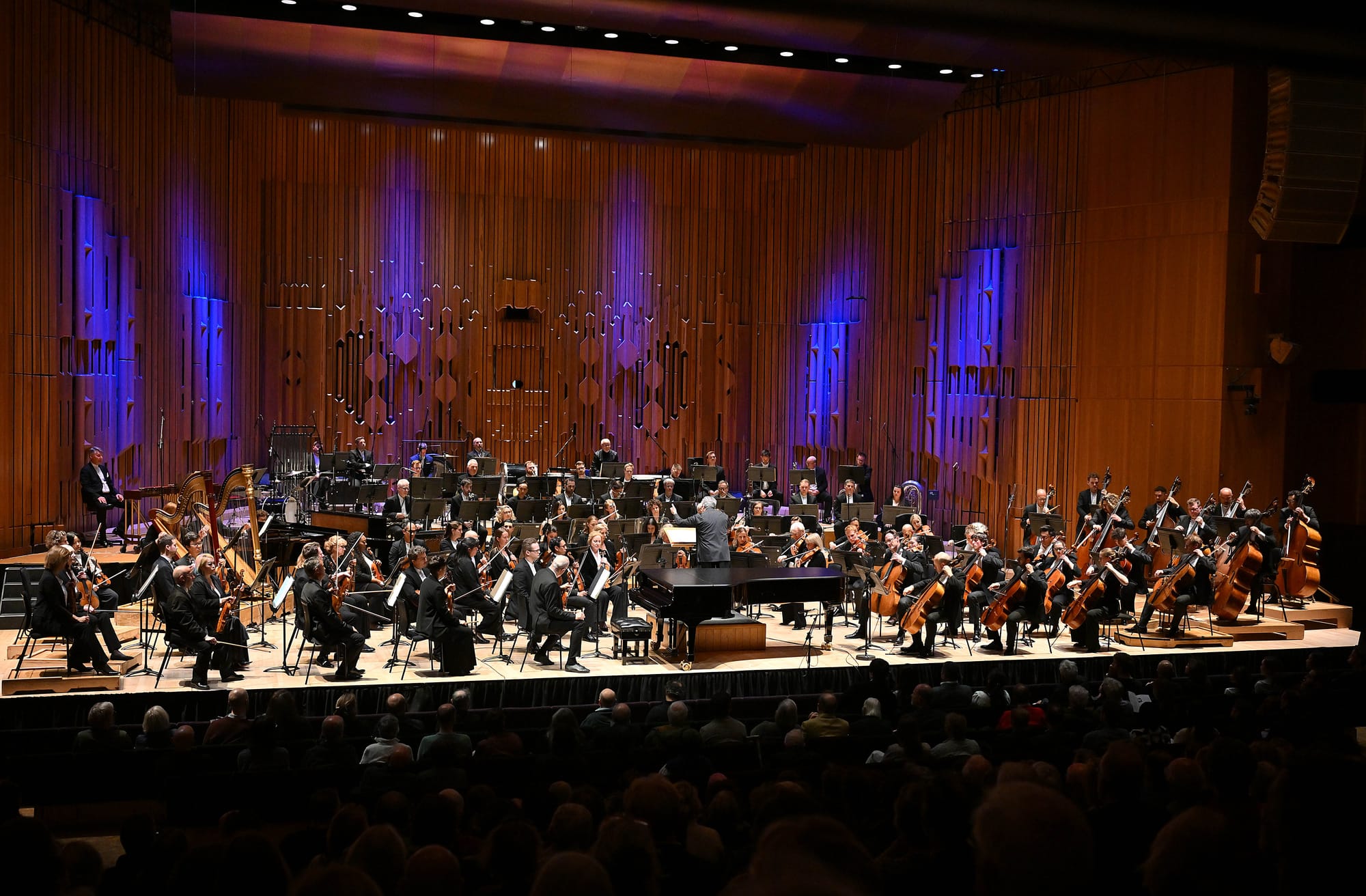
Denis Kozhukhin (piano); London Symphony Orchestra / Sir Antonio Pappano (conductor). Barbican Hall, 10.11.2026
An ambitious programme, this, with a huge orchestra assembled onstage for the Bernstein. The sheer intensity of the flanking pieces was only occasionally lightened by the more jazz-inflected/musical theatre moments of the Bernstein. But LSO audiences are tough, and educated (although more than a smattering of applause after the third movement of the Tchaikovsky might imply otherwise).
Both Britten’s Sinfonia da Requiem and the Tchaikovsky, while programmed a while ago, might well be seen as in memoriam to Michael Tilson Thomas (still listed as “Conductor Emeritus” in the personnel listing), and there was indeed a written tribute in the programme booklet. Certainly, that aspect could have helped with the LSO’s unremitting concentration on this particular evening.
Each piece played to Pappano’s strengths: the almost ritualistic aspects of the Sinfonia da Requiem were palpable, the Bernstein full of an understanding of the composer’s core language (Pappano has after all recorded all the Bernstein Symphonies) and he offered a finely-etched Tchaikovsky 6.
The Britten was unrelenting, a portrait itself of unsettled anxiety, an openly anti-war piece. Prefaced by an audible groan and foot-stamp from Pappano, the opening ‘Lacrymosa’ was hypnotic, woodwind solos plangent, repetitive, insistent and yet almost supplicatory A saxophone adds a characteristic edge to the sound (Simon Haram), while timpani made maximum impact. The ‘Dies irae’ was nightmarish in its flutter-tongued woodwind and galloping – but spectral – strings. The trumpets were exceptional, cascading descents moving towards an abyss answered by Britten’s characteristic woodwind swirls. Beauty came with the final “Requiem aeternam,’ notable for its organic build (with surely a nod towards Ravel’s Boléro of a dozen years previous) towards a sort of acceptance of place and time, if not an ovcrt optimism. A fine performance.
But it was the Bernstein that impressed most. Pappano has recorded all of the Bernstein symphonies for Warner with the Accademia Nazionale di Santa Cecilia, there with pianist Beatrice Rana, the originally-billed soloist for this concert (she is expecting, hence her absence). She was replaced here by the Russian pianist Denis Kozhukhin.
Bernstein’s Second Symphony was inspired by Auden’s poem, The Age of Anxiety, which appeared in 1947. The solo piano part was played by the composer in the first performance of this symphony (conducted by Koussevitsky). Bernstein spoke of the piano as a personification of himself, with the orchestra acting as a ‘mirror’. The setting is wartime New York, at the beginning of war. Four people meet in a bar and, spurred by the news about oncoming war and not a small amount of alcohol, they become close, embarking on an emotional search.
Although there are no words, Bernstein structures the symphony around the poem: the Prologue introduces the characters, leading to ‘The Seven Ages’ (of Man: Variations I-VII), followed by ‘The Seven Stages’ (Variations VIII-XIV). The second part of the work encompasses ‘The Dirge’ (the trip to the girl’s apartment or a nightcap), ‘The Masque’ (bebop-infused jazz, a party in which all protagonists are pretending to have fun) and ‘The Epilogue,’ which implies that all that is left, after all that, is faith.
The opening of the symphony was unutterably beautiful, thanks to the two clarinets of Sérgio Pires and Chi-Yu Mo, whose control at what must have been at least ppp was extraordinary. Kozhukhin gave the piano’s musings well, his technique, as the music heightens in difficult, never once in doubt. He did hold the music at something of a remove, though. Pappano seemed to link the tread of Variation III to the Britten; in response, the fourth variation sparkled from both piano and orchestra. All sections excelled, but perhaps the violas were first among equals, a wonderful sound.
Kozhukhin was miraculously light-fingered ((Variation XI, part of ‘The Seven Stages,’ in particular), his almost bell-like upward arpeggiation that opens ‘The Dirge’ (and which opens the work’s second part) a perfect realisation of Bernstein’s gesture. Another balancing movement to the Britten, the music sounded leaden, flecked by piano and piccolo. The jazz of “The Masque” was a lot of fun, as well as a sequence of virtuoso challenges, each one successfully achieved. There was eloquence to the final ‘Epilogue,’ too.
It was lovely to hear dialogue between the solo piano and the orchestral piano (Elizabeth Burley). But most of all it was an exceptional privilege to hear this genius score, every inch the equal to (perhaps the superior of) the Britten.
Was a piano encore necessary? We got one, Tchaikovsky’s ‘In Church,’ No. 23 from Tchaikovsky’s Album for the Young, Op. 39, a rather nice link to the Tchiakivsky in some ways. But maybe it was Bernstein whose music should have resounded in our ears into the interval.
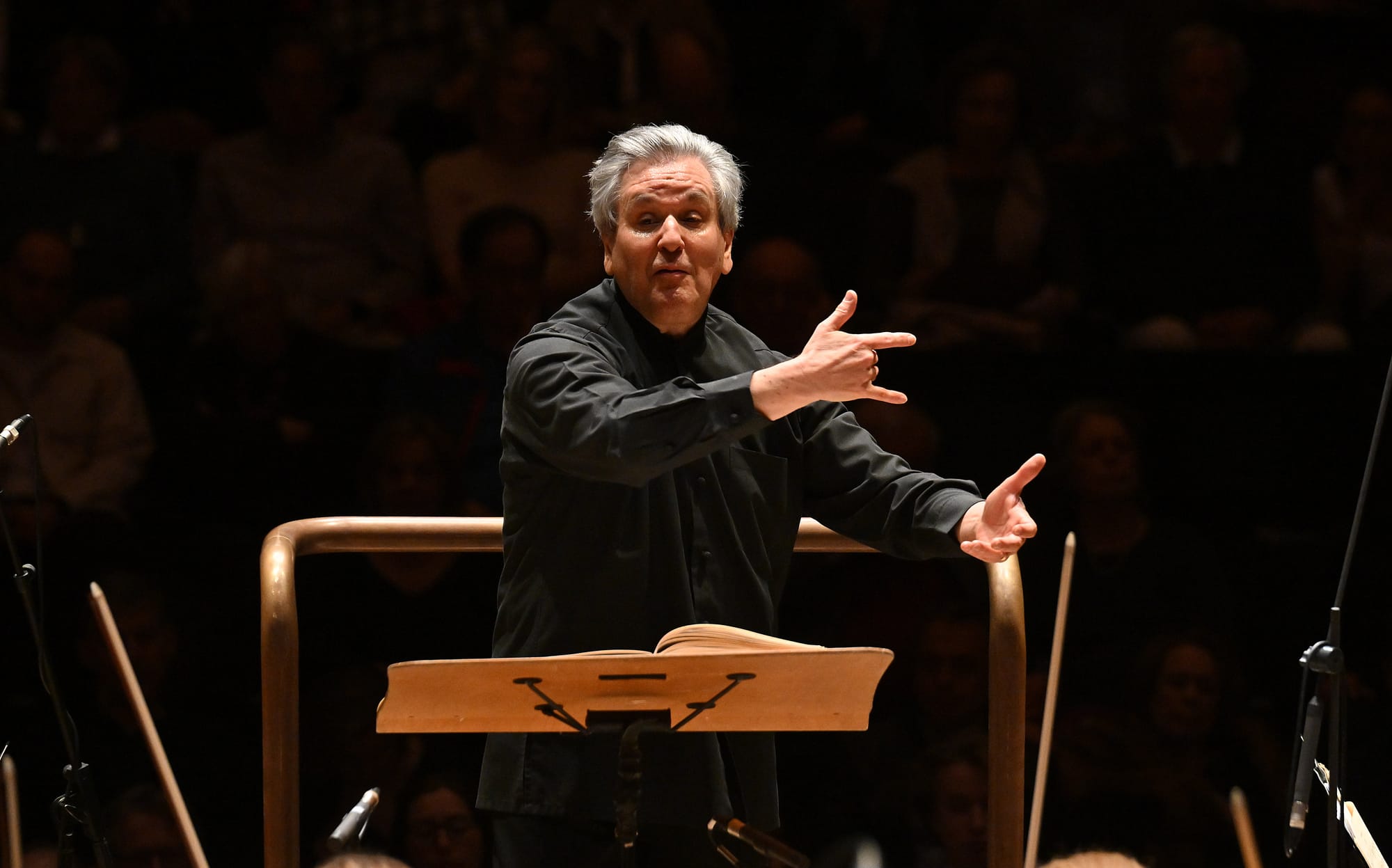
Tchaikovsky’s Sixth Symphony is a daunting emotional prospect at the best of times. What made this performance stand out was the level fo detail we heard, even above individual excellences (such as Daniel Jemison’s opening bassoon solo), and the emphasis on the characteristic descending scale (the ‘fate’ motto that pervades the final three numbered symphonies). Pappano’s sense of momentum was perfect, as was a sense of the music breathing, of inhalation and exhalation at a phrasal level. once again there was some absolutely stunning solo clarinet playing, though. The Allegro con grazia certainly had grace, but there was a tangible undercurrent of disquiet nevertheless. How amazing the strings’ chattering at the opening of the Allegro molto vivace; how well Pappano maintained tension. The music did hurtle towards a blazing ‘conclusion’ – so convincingly I did start praying there would be no applause. Alas, as usual, those prayers went unanswered …
The finale, when it came, began with an exhalation sans inhalation, a real sigh on strings. The sense of a return to the opening of the first movement was palpable, as if all that noise had been for nothing, as if that very opening of the symphony exerted some sort of chthonic force from which nothing could be airborne. The low horn stopping was the finest I have ever heard it – unsettling in extremis (and no hint of someone ripping paper loudly!). The final double-bass heartbeat was incredibly affecting.
A fine performance, and some way forwards from Pappano’s Santa Cecelia recording of this work. But it was the Bernstein that was central to this concert, in multiple senses.


%20Graham%20Boulton.jpeg?w=160&resize=160,160&ssl=1 "Celebrating John Joubert at Royal Birmingham Conservatoire in advance of his 2027 centenary")