


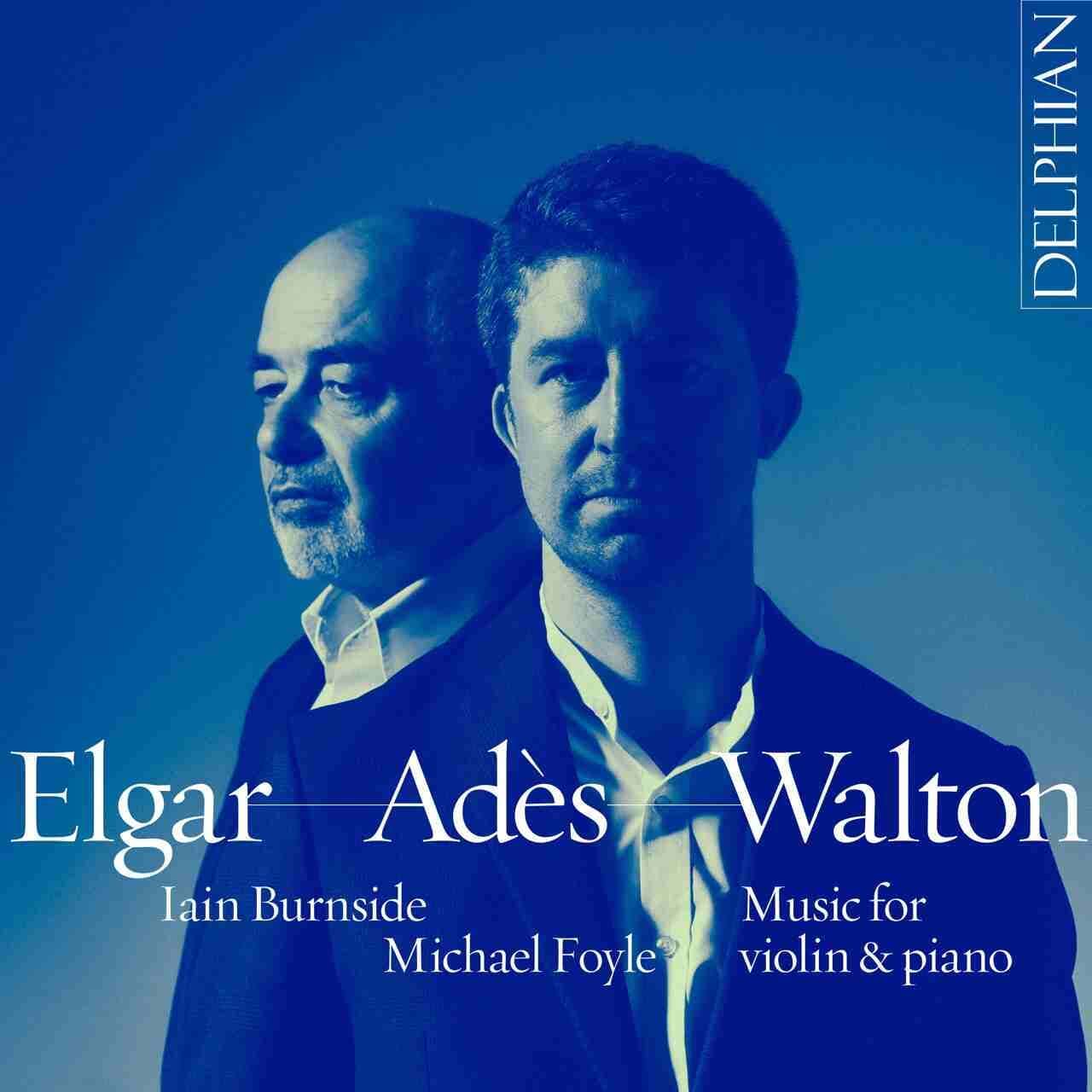
This is a vital Elgar Violin Sonata performance – it rethinks that composer’s late masterpiece, presenting it with a clear undercurrent of disquiet in the shadow of war and loss. The Songs of Night and Morning (Chanson de nuit; Chanson de matin), familiar to so many, act as glorious breathing spaces.
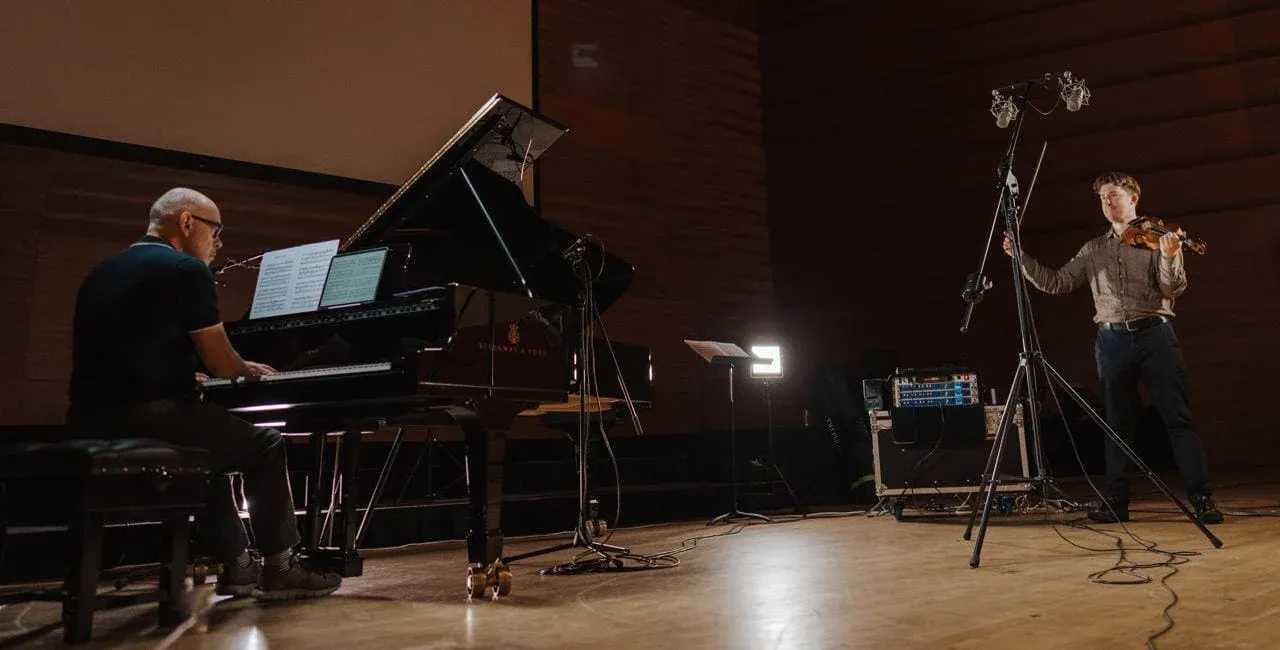
Recorded in June 2025 at Perth Concert Hall (Scotland), this is a beautiful recording of a beautiful piece. Michael Foyle (a name new to me) and Iain Burnside have a clear structural grasp of the first movement. The slow movement is a Romance (Andante) , flighty, capricious, mysterious. And this is a lovely performance, the two players perfectly in equilibrium with themselves, and with Elgar’s music. The wistful element of the music is there, but only one component of a more complex emotional matrix. The finale continues the rethink, more multivalent than usual.
This is actually our third Elgar Sonata: Albert Sammons is the historical representative, while also on Delphian, Benjamin Baker and Daniel Lebhard offer an alternative.
After a fascinating Shakespeare The Tempest from Vache Baroque earlier this summer, to Adès; although I would suggest you round out your Tempest experience via Arne Nordheim’s remarkable Suite from Bergan and Gardner. Adès offers a recasting and reimagining of his opera in four movements, written for Christian Tetzlaff and Kirill Gerstein (he also extracted “Five Spells” from the opera for orchestra, which you can hear via the LPO on its own label conducted by the composer on the YouTube playlist)
You can hear the two dedicatees talk about the piece, and hear parts of it, in this video:
First, “Caliban: The island’s mine,” a kaleidoscope of unpredictable colours; it is followed by Ariel’s, “Full Fathom Five thy father lies”, a beautiful whisper of a song, beautifully controlled by Foyle. The remaining two movements do not reference the play/opera quite so specifically: “Miranda: Aria & Quintet” begins with a different type of song, one that seems to reference the past more strongly, and one in which one can hear the exact ensemble and complete resonance of Foyle and Burnside. But it is the floating freedom of “Caliban & Ariel” that is primetime Adès: gossamer, elusive, unique.
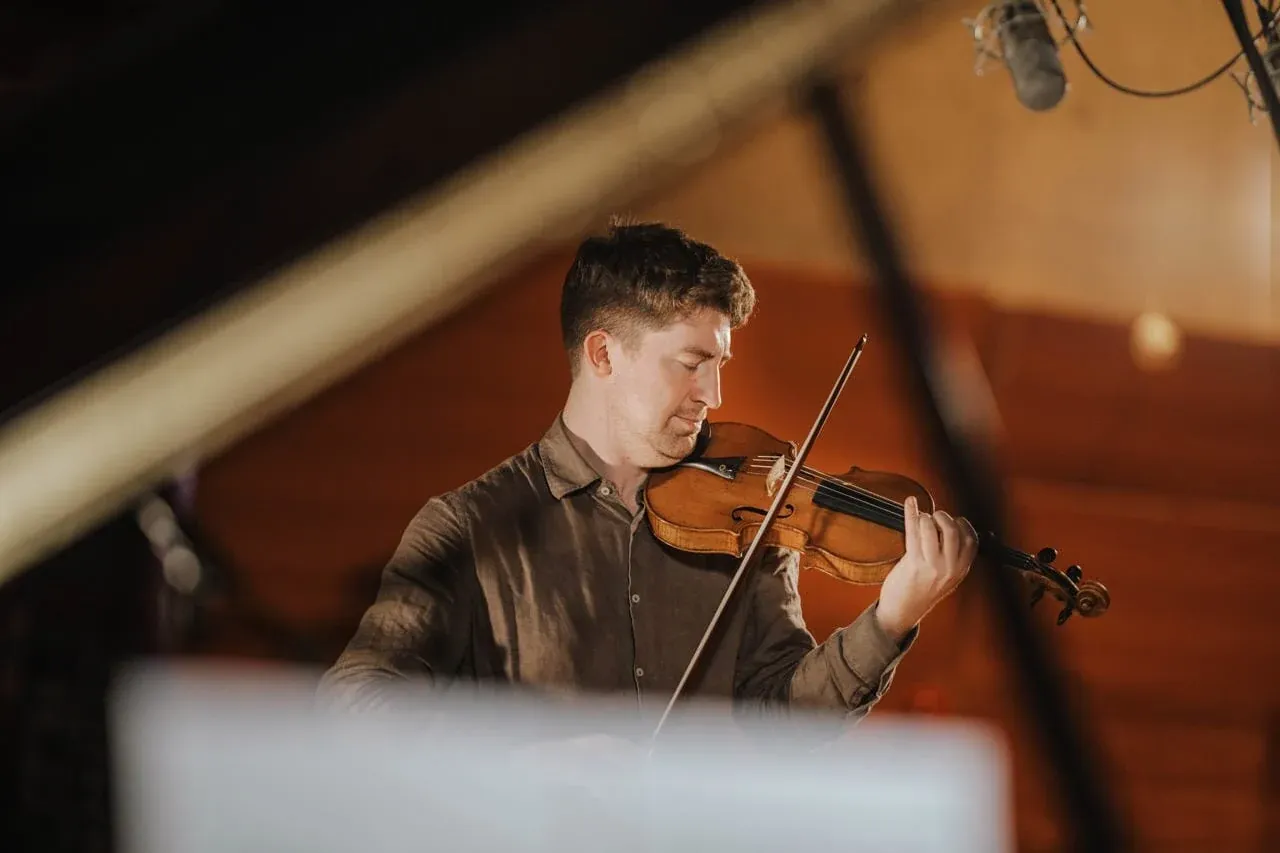
The sleight here is that the opening of the Walton does not sound out of place at all – rather it takes the intimacy of the Adès and runs with it; Foyle and Burnside make some of Walton’s faster passages analogous to Adès’s elfin mode, too. The piece was written for Yehudi Menuhin and Louis Kentner and is a masterpiece in two movements, an Allegro tranquillo and a set of variations. Foyle and Burnside are excellent at the calm discourse of the first, and understand the trajectory of the second (which begins with rather a complex theme, and thins it out over the course of the variations, which function as combined slow movement, scherzo and finale.
For those that think they know Walton, the theme might some as a surprise: it is of the heavily fragranced chromaticism one might find in Berg or Schoenberg. The segue between variations is superbly done here, the whole seeming completely natural – and markedly sophisticated. This is such a fine work, but rarely heard. The performance here is excellent up until the ending, which is somewhat studio-bound (and therefore lacking in fire).
You can find the present performance below for streaming. As an alternative, here’s Max Rostal in the first movement with Colin Horsely from their recording housed on the Decca box of 10th-Century Violin Sonatas:
Iain Burnside offers a fascinating endnote which describes him fanboying Walton at a party, and how the resulting conversation allowed him the freedom to recast some of the chord stretches.
As a sort of play-out, Elgar’s two Chansons, of night and morning, twp supreme miniatures (a form in which the composer was expert – try one of the many orchestral suites, perhaps the Wand of Youth). I particularly like Foyle’s light way with the Chanson de matin.
The disc is available at Amazon here; the LPO orchestral suites recording (Tempest, Powder Her Face and Inferno) is here. Streaming below.