
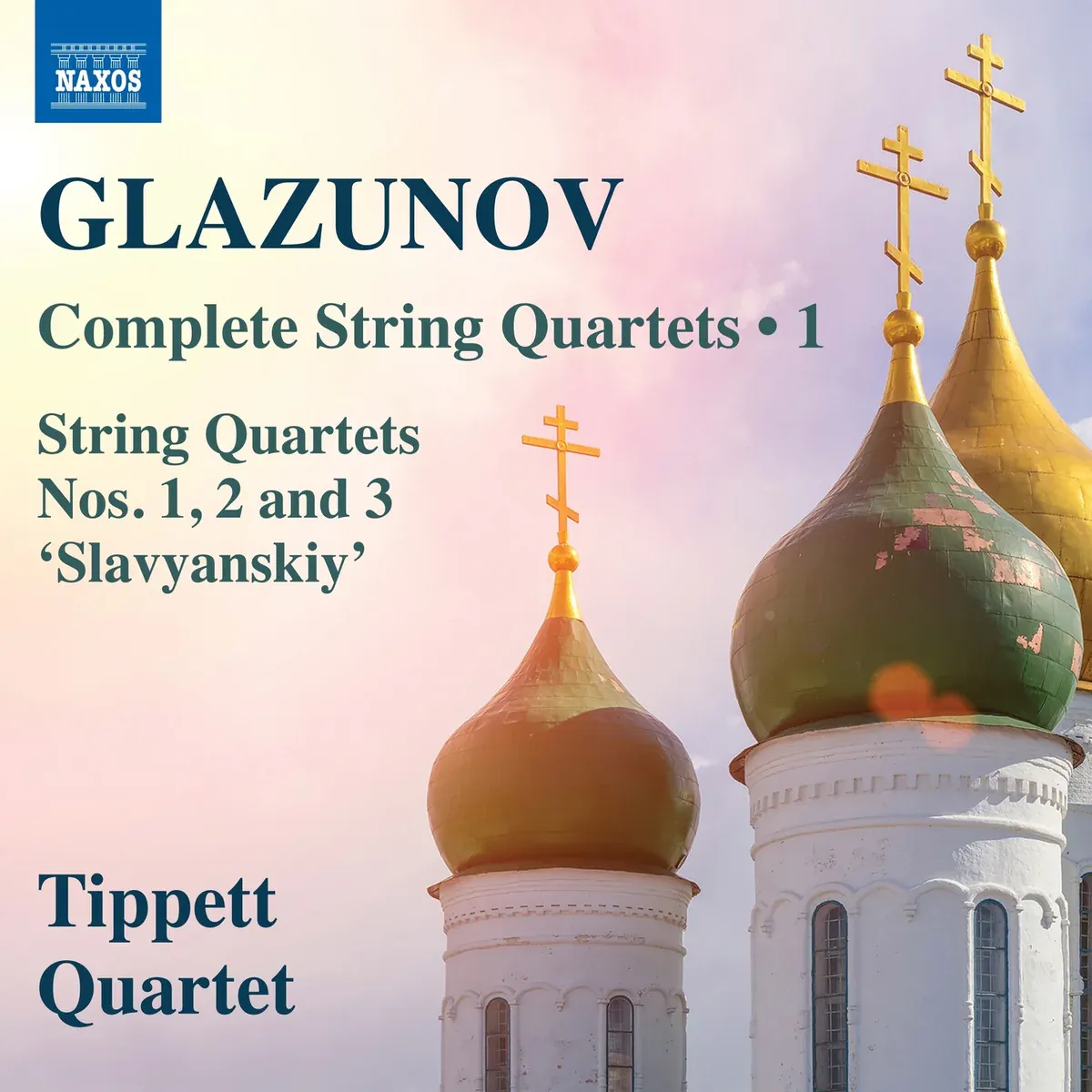
We first met the Tippett String Quartet via Penderecki Complete Music for String Quartet, also on Naxos, then live at Thaxted Festival. Now, one of the most cruelly under-rated composers out there: Alexander Glazunov (1865-1935).
The first quartet is in D-Major, and dates from 1881/2. The mix of folkish melody with formal acuity is notable: the “holding” of that material gives it focus, within which the most remarkable sounds can emanate, including what is surely a reference to a type of hurdy-gurdy. The Tippett Quartet is appropriately rustic when need be; another aspect of this is a certain nod to the ballet (of which Glazunov was a master):
There are shades of grease paint about the light Scherzo, too, spiky, properly Vivace as requested. Possibly modelled on the parallel movement of Borodin’s First Symphony (although that is a Prestiussimo. it receives a perfectly judged performance here who strike right at the heart of Glazunov’s vernacular:,
The Andante’s only fault is that it is short: one wants the heavenly (and Slavic) melody to go on forever; the finale is a Moderato. The Tippett Quartet do inject some urgency to the main theme, but the delight rests with Glazunov’s invention, in teh counter-melodies, in the restful lean-ins to cadences. There’s a lovely pizzicato moment against cello melody, too:
The Second Quartet, Op. 10 of 1884 begins with a strong statement in rhythmic unison. The piece is more ambitious than the First Quartet, its twisting, entangling limes, reflected in the increased sophistication of the Scherzo (again, placed second/ How lovely the contrasting Trio, unmistakably Russian in tone:
The technically-challenging Scherzo iswell negotiated here by the Tippett Quartet (qlthough not without a certain sense of strain – which arguably makes the final triumphant statement of the theme more effective).
An Adagio molto now: truly profound, hushed, glorious. Why don’t we hear this much more? I’d love to hear any of these three quartets (remember, this is Volume 1) live:
If there is a weak point to this quartet, it is the finale. The Tippett Quartet give it their all, but the inspiration seems a little lower here from the composer. To my ears, it is musically unsatisfying, sadly.
The Third Quartet (1886-88) begins gently, with a magnificent sense of ease. There is interesting counterpoint, all couched within this sense of repose:
The second movement is entitled, “Interludium,” containing a beautifully hushed sense of anticipation. Perhaps there are echoes of Orthodox hymns here?:
No scherzo here, instead an “Alla mazurka,” resolutely minor-mode but with some beautiful moments for the two violins, contrasted with the most remarkable rustic dance, full of blaring drones:
The finale is a riot: its subtitle, “Une fête slave” (linking to the work’s subtitle, “Slavyansky”) and it is all of that here, a collection (and often combination) of everything that has gone before, from drones to folk melody to Slavic nostalgia. A fabulously inventive movement in a gloriously unbuttoned performance:
Roll on Volume Two (there are seven string quartets, plus sundry pieces for quartet).
This Naxos disc is available an Amazon here, iDagio here.


.jpg?w=160&resize=160,160&ssl=1 "Only love can bear the burden of truth: Ben Parry & Garth Bardsley on their new opera that premieres at Snape this Saturday")