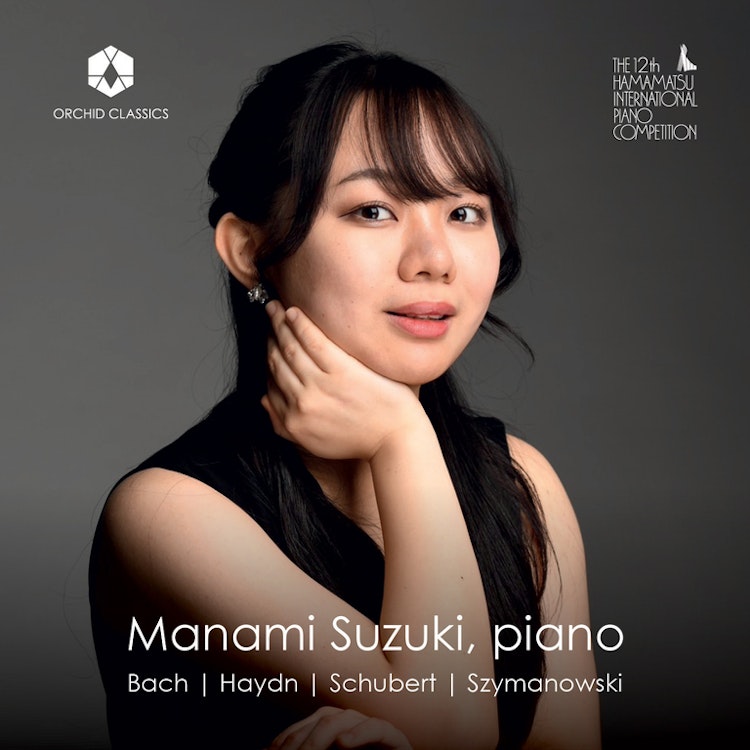



The Hamamatsu International Piano Competition peasants Manami Suzuki King’s Place, London, 23.01.2026
Haydn Piano Sonata in G, Hob. XVI:6
Bach Prelude and Fugue in B flat minor, BWV 891 (WTC Book II)
Szymanowski Metopy, Op. 29: No. 1m “Wyspa syren”; No. 3, “Nausicaa”
Fauré Valse-Caprice No. 2 in D flat, Op. 38
Schubert Piano Sonata No. 18 in G, D 894
22 year-old Manami Suzuki won the 2024 Hamamasu Competition, in Japan. She was the first Japanese pianist, and also the first female pianist, to win (she also took the Chamber Music Award and the Audience Prize). Previous winners have included Sergei Babayan (1991, the very first event), Alessio Bax (1997), Seong Jin Cho (2009), and Rafał Blechacz (2003). On the back of her win, Suzuki has already brought out a solo disc on Orchid Classics (see Classical Explorer‘s post here).
It is a measure of Suzuki’s maturity that, for all of her clearly fine technique, she placed Schubert’s expansive G-Major sonata in the second half. Virtuosity for its own sake clearly has no appeal for Suzuki: she began with a Haydn sonata, its first movement blessed with superb articulation. One other aspect was immediately clear: Suzuki had the measure of Hall One at King’s Place (I have heard some massive miscalculations over the years). Structurally, she hears well, too: the return of the opening material in the first movement was highly effective, while the two-part textures of the Menuet acted in perfect contrast to its central section. The Adagio seemed close to early Beethoven (Op. 2/1’s slow movement in particular). Suzuki just got away with the level of pedalling, and her trills, not for the last time in the evening, were truly exceptional (better live than on the Orchid disc). Her finale was arguably more Presto than Allegro molto, but her control of articulation and rhythm was pristine.
The Bach opened her album; here, it came after the Haydn, the Prelude again receiving pedal (without over-blurring), the Fugue’s carefully sculpted dynamics, available on the modern piano and not on the harpsichord, playing a real part in the shaping of this reading. She did lose the thread a touch, though (more here than in the recording), and there was the occasional point-making. Less can be more.

There is no doubting Suzuki’s alignment with Szymnowski, however. Whether we use Metopy or Métopes as the title (the programme booklet offered both), the music exudes perfumed exoticism, “L’île des sirenes” has a sense of veiled danger about it – as well it might, given the title – which explodes out at times. Suzuki maintained clarity no matter what the dynamic, or how thick the texture. There is a Debussian aspect to “Nausicaa,” and Suzuki projected its fleeting nature superbly; the climax was awe-inspiring.
Suzuki’s disc included three Szymanowski pieces (the other, “Calypso”); here, she substituted a piece by Fauré, the second Valse-Caprice. A charming piece that feels as if it could almost tip over to the hallucinogenic extremes of Revel’s La valse (but never does), it houses a lovely, more interior central section. Suzuki’s performance was affectionate, marked by her trademark clarity and intelligence (she played this piece in the second stage of the Hamamatsu competition, and that performance remains publicly available on YouTube , there, sandwiched between Brahms’ Op. 76 and Toshiro Saruya’s Division 28):
Finally, Schubert’s D 894, proof positive that Suzuki plays well beyond her years. The interpretive challenges of the opening Molto moderato e cantabile are many and varied. Firsly, Suzuki’ssound was warmer, as befits the opening bath of G-Major; she also accords the bass in Schubert appropriate weight, too. If there is a major-mode equivalent to Winterreise, this was it. Her cantabile, so necessary in this repertoire, is silken (including right-hand octaves); and her awareness of the Landler hints in Schubert’s writing could not be faulted. Neither could her tempo for the second movement Andante, where the shift to the minor was so telling. The spirit of the German dance returned in the Menuetto, while the performance of acciaccaturas was tellingly characterful, Suzuki allowed herself space before the onset of the finale; when it came, the whole was perfectly calibrated, with some beautiful rolled chords and harmonic shifts.
Suzuki holds so much promise, and clearly has a mature head on her shoulders. She also clearly has a bright future ahead.
Manami Suzuki’s Orchid Classics disc is available here.