

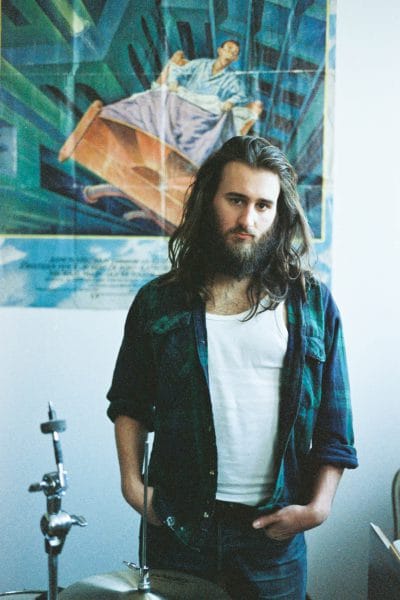
Les Pleurs d’Orphée: L. Couperin, Rossi, Moulinié. Jean Rondeau (harpsichord); Ricercar Consort. Wigmore Hall, 11.03.2026
Louis Couperin
Prélude in A minor. Suites: in D (including Rossi’s Fantaisie, ‘Les Pleurs d’Orphée’); in F; in A; in G (including Moulinié’s Fantaisie a quatre pou les violes).
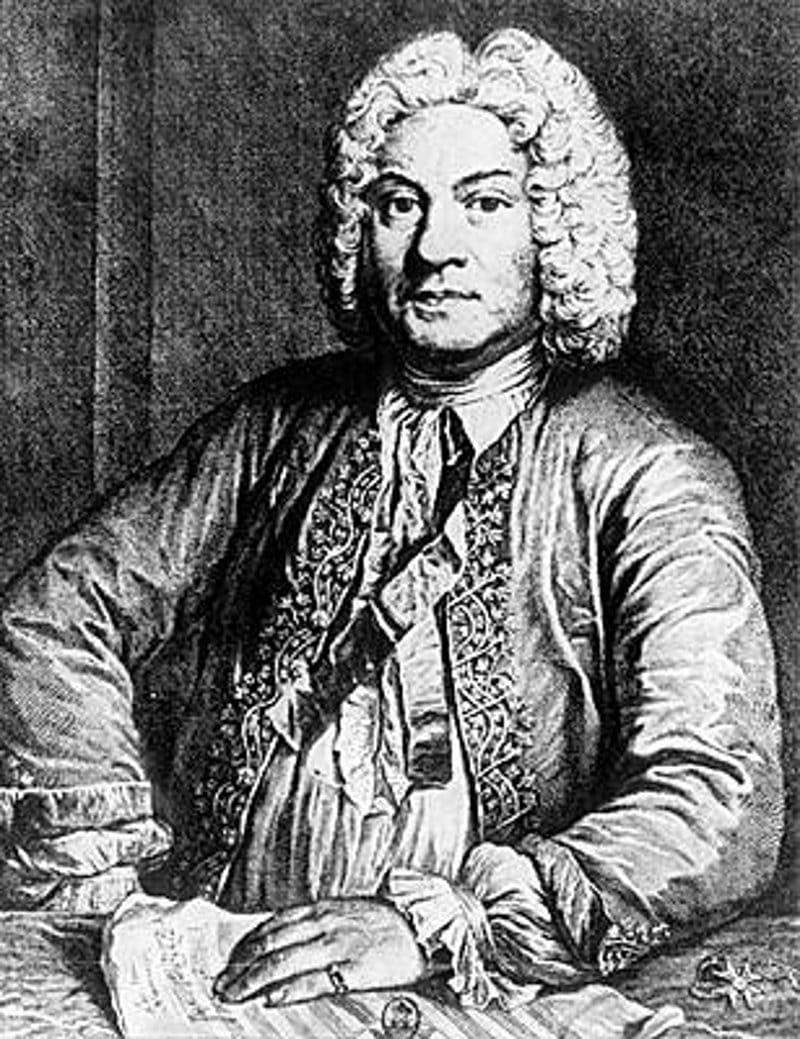
It is wonderful to see Louis Couperin (1626-61) in the spotlight, a composer of vital importance to the early French Baroque, but who died at the cruelly young age of 35. This is music before the standard Allemande-Courante-Saabande-Gigue Suite was settled, so performers can take Louis’ movements and construct suites of their own as was the case here. The concert comes in the wake of the release of he complete Louis Couperin on Erato, performed by these forces
Some more information regarding which pieces we heard would have been good, even if the whole was presented as one uninterrupted flow in semi-darkness and the progamme was, at the end of the day, a freesheet. The works were presented as a series of “suites” (D, F, A, G) with a couple of stand-alones. The first of those was the Louis Couperin ‘Prélude in A minor’ as the freesheet calls it (with no catalogue number, either Oldham or Gustafson). It appears to be the Prélude, OL 46, transcribed by Rondeau for harpsichord (as the original is for organ, from the Grand Livre d’orgue de Louis Couperin). Rondeau’s performance was magnificent, given with a sort of regal confidence, the very opening daringly slow (more so than on his Warner recording in that magnificent complete works box). Sadly no indication was given as to the provenance of Rondeau’s instrument, either.
Initiating the ‘Suite in D’ were two Fantaisies, the first ‘Fantaisie pour les Violes par M. Couperin,’ the second ‘Fantaisie de violes par M. Couperin’. They are titularly similar and indeed share common traits, but are distinct in that the first (‘pour les violes’) has a real lyrical gravitas (perfectly conveyed here) which leads to a more animated, dance-like section (together, the Ricercar Consort makes a magnificent sound), while the second (‘de violes’) is more concise and is more harmonically-driven. They both originate from the Bauyn MS, probably from Couperin’s Parisian period (c. 1650s-1661).
Inserted into the sequence recorded on the Erato set is the Fantaisie ‘Les Pleurs d’Ophée’ for viols by Roman composer Luigi Rossi (1598-1653); a piece thematically related to, but not directly extracted from, his opera Orfeo of 1647. There is no missing the descending lines representing Orpheus’ tears; a most affecting performance at the Wigmore, before returning to Louis Couperin via the Symphonie pour M. Couperin, two minutes of glorious melodic flowerings and counterpoint. The piece Volte 53 (G 53 in the Gustafson catalogue) was originally for harpsichord and appeared in a (non-attributed) transcription for viols by Philppe Pierlot, as did the Chaconne 55. Volte 53 is a dance, lovely and light on its feet and yet, cloaked in the sound of viols, entirely fitting in context (perhaps one should not be too happy in a darkened room!) before the Chaconne 55 (G 55) offered the perfect mix of formal structure with the lachrymosity of the Rossi.
Here’s the ensemble perfomance on the set:
… and here’s the harpsichord version:
The programme did focus on the ensemble aspect of Couperin, and I wonder if more Rondeau seul would have been good. Take the next constructed ‘Suite,’ that in F. The second in sequence is ‘Allmande 66’ which in the complete Erato box also appears both with Rondeau as solo harpsichordist, although surrounded by a different Courante and Sarabande, for example; surely we could have heard both alternatives, with Rondeau performing the movement separately? Anyway, we didn’t. The Suite opens with a ‘Symphonie’ (in the sense of . homophonic prelude originally notated in whole notes minus barlines: G 70, from the Bauyn MS). Some of the exuberance of that notion was heard in the performance, inventive and yet gentle. The ascent that opens the ensuing Allemande felt just right; there was a real sense throughout the concert of tempi being perfectly realised to allow the music space. Courante 69 was all gentilité, The gorgeously profound Sarabande ceded to the ‘finale,’ the ‘Tombeau de M. Blancrocher,’ G 81; again, Rondeau performs the solo version on the Erato set on the harpsichord (a very different experience, definitely more skeletal), and it would have been fascinating to hear it here, too. Given that the concert was 70 minutes exactly, there was space available.
The final ‘full’ ‘Suite’ was in A, and of slightly different construction than that recorded by these forces: Here, we had Prelude 8 and a ‘Symphonie par M. Couperin’ followed by Allemande, G 100, ‘La Piemontoise’ (in transcription). Courante and Sarabande; the recorded version adds a second Courante (‘La mignon,’ G 105) and second Sarabande (G 23). There is a real tendency for popularity to orient towards ‘nicknames’ in music (think of the poor Haydn symphonies without, and their neglect!). Perhaps ‘Le Piemontoise’ (G 102) does deserve extra attention, though, a fascinating and characterful miniature. A good idea to end on a Sarabande, too: it segued into the Pavane 120 (again, there are two performances in the box, one solo, one ensemble). The sheer dignity of Sarabande 109, which closed the Suite in F, is itself related in demeanour to the stunningly beautiful and harmonically enrapturing Pavane 120, cast generally in F sharp minor but with exquisite (and adventurous) dissonances, all beautifully emphasised by the Ricercar Consort players.
Finally, a Suite in G, which includes a piece not in the box: a Fantaisie à quatre pour les viols by Etienne Moulinié (c. 1600-69), its dissonances touching – although not quite as daring as Louis. The other constituent parts of this Suite are the ‘Fantaisie’ (which has pretensions to French Overture in its dotted notes and gravitas) and the ‘Autre Fantaisie,’ more gentle, a sort of tender leave-taking. Quite right that the concert should end in such a fashion, with Rondeau nicely peasant in both pieces. Both Fantaisies in this Suite are minus G number, but originate from the Bauyn MS.
The performances were generally of the highest calibre; unsurprisingly given the players’ immersion in this music. There was no indication of what harpsichord Rondeau played on, sadly (maker, year …); and the only performance quibble was some recurrent tuning issues from the ensemble’s director, Philippe Pierlot (on viola da gamba). But ‘conversations’ between viola da gambists (Pierlot, Lucle Boulanger, Myriam Rignol, Mathias Ferré and Anna Lechgyi) were superb. Continuo contributions were nicely varied between Rondeau on harpsichord, Louise Acabo on organ and Thibaut Roussel on theorbo.
Quite a change from the previous night’s Ligeti; but also a perfect complement, one might say. While Orpheus himself might cry, we should surely rejoice in such an abundance of Louis Couperin.
The superb Louis Couperin box is available at Amazon here.