Hildegard of Bingen
O vis aeternitatis
Mahler
Symphony No. 2 in C minor, ‘Resurrection’ (1888-94)
Kent Nagano (conductor); Jane Archibald (soprano); Christina Bock (mezzo); Phiharmonia Chorus & Orchestra
Royal Festival Hall, London , 19 March 2026
There was a time when London’s walls were papered with Mahler 2’s; certainly, in the 1980s, performances were regular occurrences with nary a month going by without one or other of the capital’s concert halls having its roof blown off by massed choirs belting out Klopstock.
The Mahler craze has quieted, but there is always space for the mighty sonic edifice of the Second. Fittingly, given the prominence of the brass in Mahler, this performance was dedicated to the memory of trumpeter John Wallace, former Principal Trumpet of the Philharmonia Orchestra. The timeless music of Hildegard of Bingen was particularly poignant in his regard, the upper voices of the Philharmonia Chorus intoning, as they processed around the stalls and back out again, O vis aeternitatis (c. 1140-60). It is a touching text and a beautiful melody that has inspired musical characters as divergent as Héloīse Werner (on her disc, close-ups) and composer Barbara Harbach (Visions of Hildegard). A difficult task, to sing and walk at the same time, and possibly therefore not the most natural performance. Perhaps the point of contact with Mahler was the line, ‘Et sic indumenta ipsius / a maximo dolore abstersa sunt’: And thus the garments were wiped clean from the grreatest sorrow’.
There was no space for resonance after that final line: it was straight into the drama of Mahler’s Second. Nagano’s Mahler is a known entity, and shares with his Wagner (his ongoing historically-informed Ring cycle in particular, closing with Götterdämmerung in Dresden in May) an x-ray awareness of detail. This was an individual interpretation of the highest rank, as Nagano manages to pair that sense of detail with an awareness of the big picture, allowing climaxes to really register (another commonality with his Wagner).
Nagano also has the ability to create just the right momentum, a trait important everywhere but maybe especially so in the symphony’s opening paragraphs. His conducting technique is near-infallable, too: of all the many Mahler 2’s I have heard, none contained such perfectly controlled Luftpausen as this. Nagano gave space for the contrasting themes; again, just the right amount. It is worth mentioning some individual contributions from the orchestra that stood out: first horn Laurence Davies, and cor anglais player Maxwell Spiers.
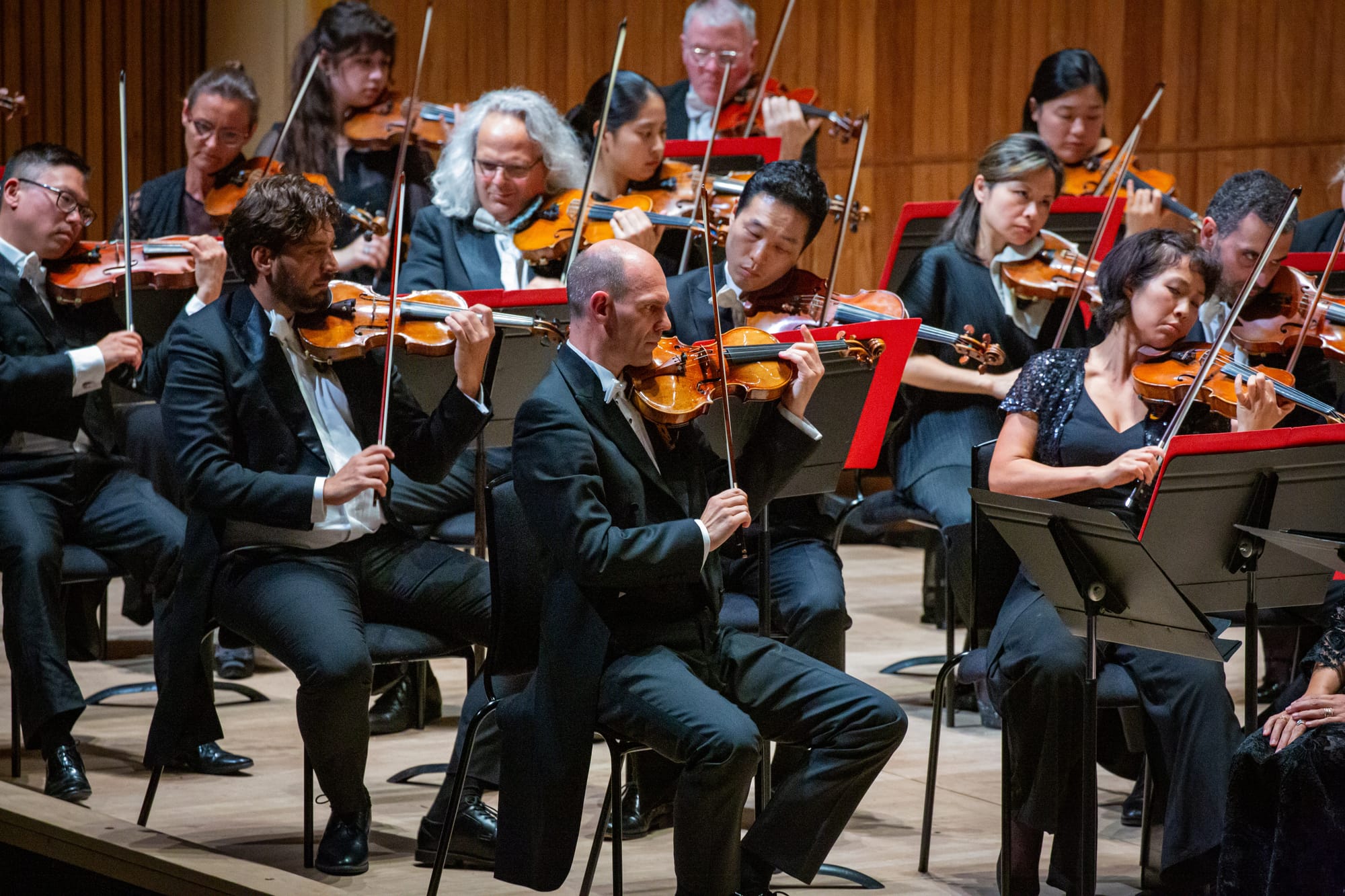
How gentle were the strings in the second movement, unmistakably a Ländler-like dance, flecked by flute. And here, another aspect of Nagano’s influence: a timbral awareness that allowed for some remarkable passings of the thematic baton between flute and solo violin, and between flute and clarinet (and more besides). An extension of that is the success of the antiphonal placement of violins, as the two parts interplay. The string pizzicato passage was near-perfect, too. In perfect contrast came the timpani outburst of the third movement, and its grotesque woodwind scoring. An hallucinatory dance; perhaps my only criticism is that some of the percussion effects could have been more marked. One aspect of this movement was how Nagano’s requested phasing emphasised the circularity of themes: how they rotate, almost hypnotically. No complaints about a woodwind passage that came across as an imported barrel organ, though , or the perfectly timed harp glissando.
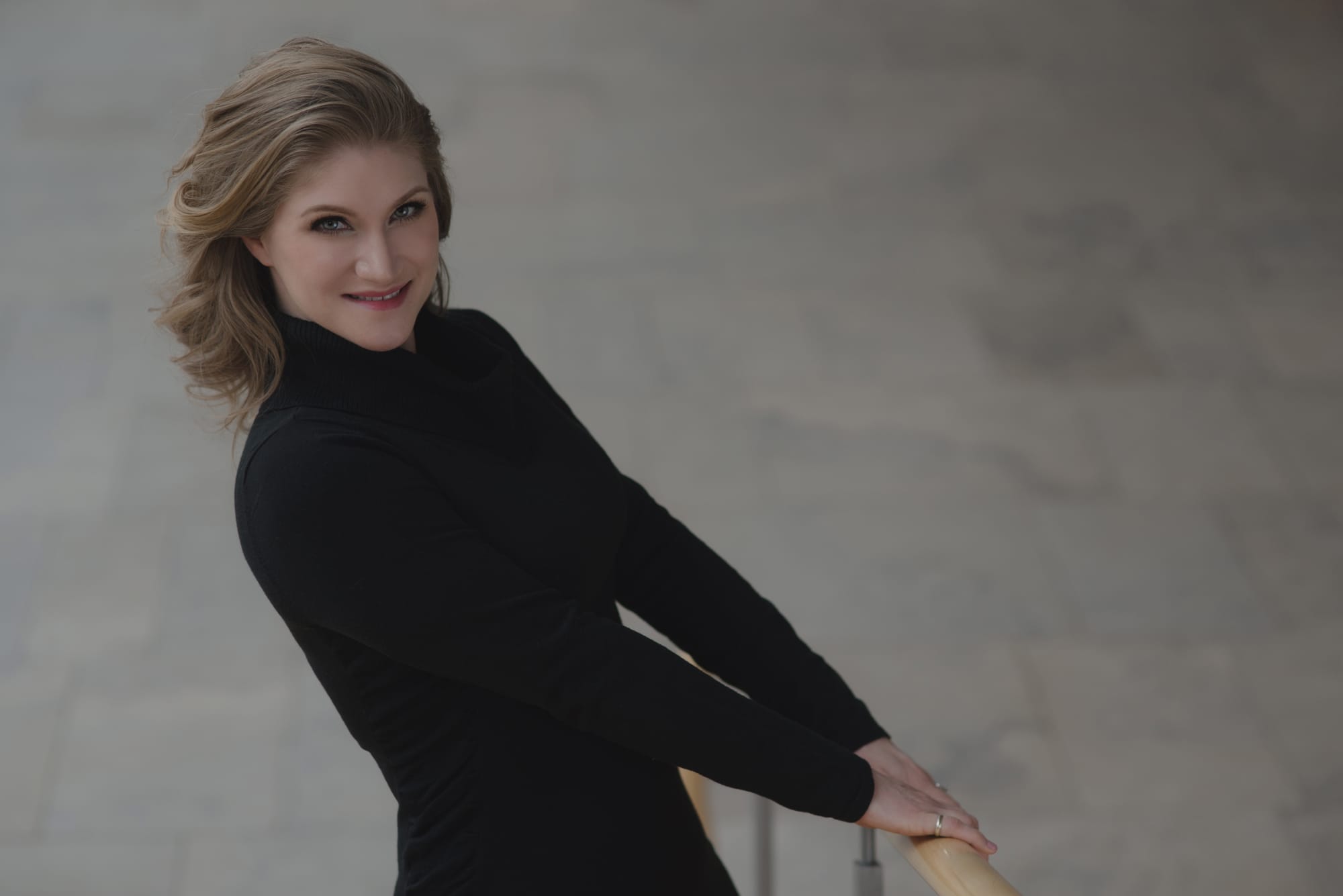
Christina Bock was the mezzo soloist for ‘Urlicht,” her voice rich, off-stage brass offering a chorale response to the opening ‘O Röschen rot’. It was not just that Bock’s voice has body and richness; it also contained pain (and, after all, there is much pain in Mahler). Her ‘Ich bin von Gott, und will wieder zu Gott’ was the most believable I have heard it, a proper entreaty for unity with deity.
The opening of the fifth and final movement characterised Nagano’s Mahler to a tee: powerful, and yet preternaturally accurate. A simply superb trombone solo from Matthew Lewis was another highlight of the evening, as was the velvety sound of trombones and tuba at the ‘Dies irae’ theme. This finale is a movement of extremes, and Mahler piles on the scoring in true late-Romantic fashion. Somehow, Nagano made sense of the thorniest passages like few before him, while honouring the Modernism of the score, most notably in those proto-Ivesian moments of thematic juxtaposition. This was not the perfect performance, technically: some tuning was off from the off-stage horns at one point, but it was certainly unforgettable (including the loudest piccolo I have ever heard!).
The placing of the off-stage contributions was carefully and effectively thought-through. Jane Archibald was just as special a soloist as Bock, her soprano the perfect complement to Bock’s mezzo. But it was Nagano that choreographed the great choral climax so perfectly, the Philharmonia Chorus beautifully soft on entry, the male voices later creating an imposing wall of sound, Nagano extending the silent pause after ‘Bereite dich’ daringly, as if himself asking, ‘Prepare yourself for what?’. ‘To live,’ came the answer, and how beautifully Archibald crowned the chorus. The Philharmonia Chorus could only be described as fearsomely present in the work’s final stretch; and yet the brass crowned it all, perfectly. Good to hear the RFH organ at full tilt, too.
One tiny aspect of Nagano’s conducting did puzzle me, though, In the finale, as the male voices enter (after the soloist) with ‘Mit flügeln, die ich mir errungen’ (With wings I have won for myself), Nagano conducted in four, only moving to two at the female voices’ entrance a few bars later. Was four necessary at all? Or for that ‘long’?
Tiny, as I said. Nagano’s Mahler is, perhaps, the perfect combination of Sinopoli-like deconstruction and Abbado’s emotionality (to include Bernstein would be to skew the compass). A memorable concert.


-5.jpg?w=160&resize=160,160&ssl=1 "Cross-cultural cross currents: Jasdeep Singh Degun with Fantasia Orchestra in Terry Riley's iconic In C performed by string orchestra, piano, sitar and tabla at Smith Square Hall")