


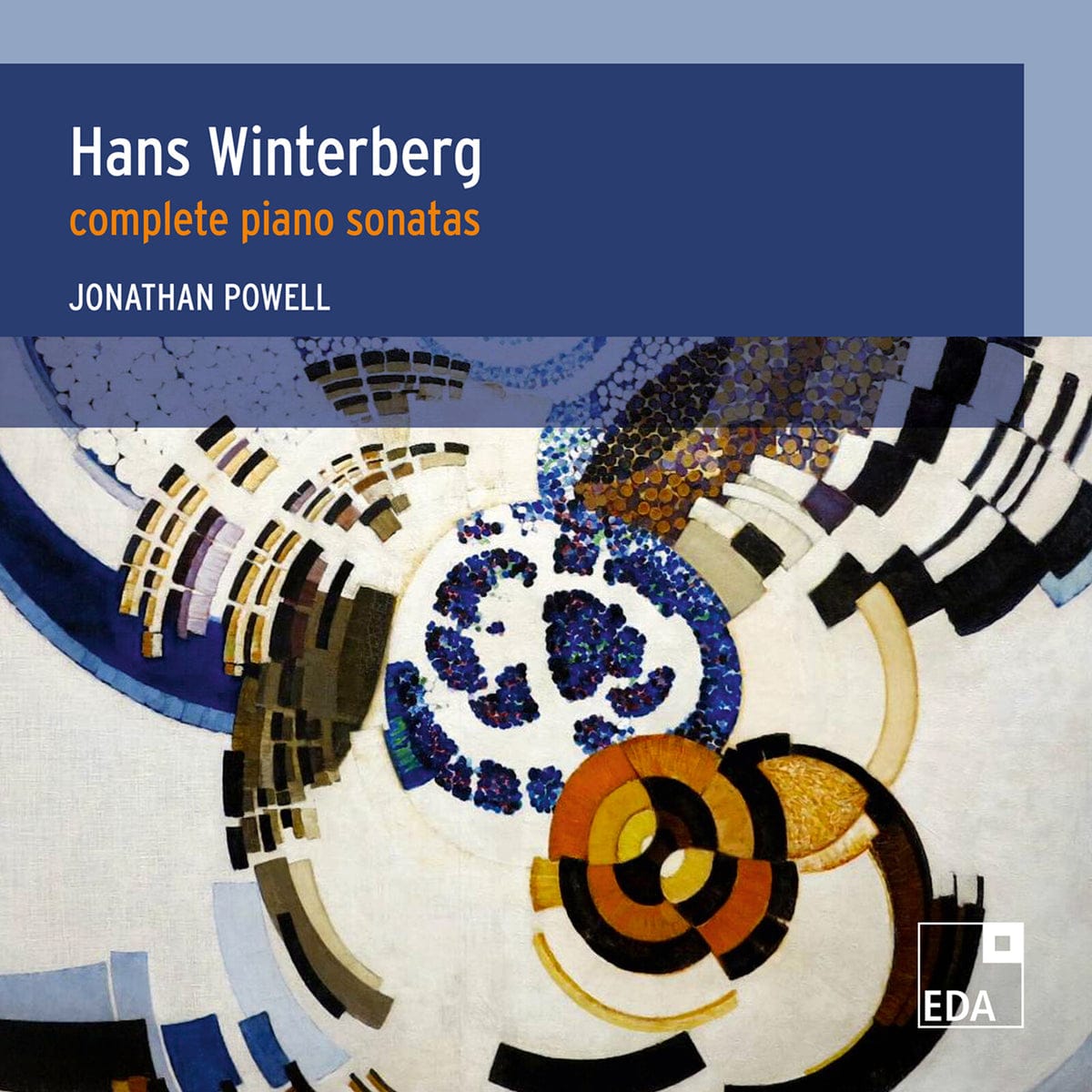
We have written previously on Hanuš/Hans Winterberg, including a concert in Berlin, and an article here, In addition, for the USA journal Fanfare, I reviewed a disc of orchestral music including an historic recording.
This disc comes a a poignant time. The pianist, Jonathan Powell, died last week, aged 56. He was known as a pianist and musicologist: his booklet notes for the present release are some of the best I have read. There is some of the finest of pianism here, too: Powell specialised in contemporary and marginalised repertoire (he was also a composer himself).
In 2003, Powell unforgettably launched the Park lane Group’s 48th season at South Bank with a performance of Sorabji’s Opus Clavicemblisicum (the first time I had heard he work since John Ogden in the “next rcom,” the Queen Elizabeth Hall, in 1988). At the time, I described Powell as ” a major talent and one that should be watched closely” (link to full review).
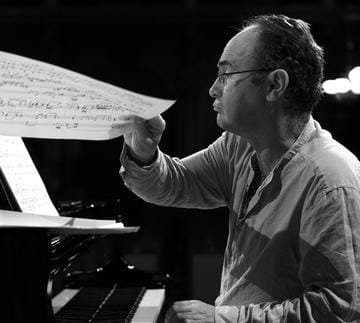
The meeting of Winterberg and Powell is a mach made in Heaven. Powell seems to have maximal sensiivity to all paamametrs, from chord weighting, to pedalling, to structural grasp. Three of the five sonatas are World Premiees.
The Agitato of the First Sonata (1936) is at once flighty and energetic in Powell’s hands. He chaacteises the first sonata as “ecstatic, frenzied” for all of the three movements (*Agitato,” “Adagio,” “Molto vivace”).
The second movement becomes increasingly, achingly expensive. Later, repetitions of fragments invoke the rage laid bare in the first movement. The last movement, a Molto vivace, is the longest. Listen to how Powell makes sense of every line: each has integrity and yet they weave together to make the most intriguing textures. The fearsome difficulties are negotiatad with ease by Powell. The bass of the piano is superbly ended in eda’s recoding, the treble also finely formed:
The First Sonata is the only one to come from the time of Winterberg’s studies with Alois Haba in Prague.The Second Sonata is characteisted by Powell as of “musical, dynamic contrast”. It again opens with an Agitato .Writen five years later (1941), this is.fascinaing work in which the shortest moment (the central Andante sostenuto, 2″53) is the one of greatest emotional scope;
The finale, again Molto vivace, is abuzz with energy, while contrasting sections contain real Expressionist lyricism.
For the first two sonatas, thee is an alrernative: on Toccata Classics by Brigitte Herbig. But she is makeddly more pedestrian, and literal, in the first movement of the First Sonata, and the Toccata recording has less presence than eda’s. own, I do like Herbig’s playing of single-line strands, which have a preternatural poignancy. Similarly, the Adagio is her finest movement, But, the recording stands in the way of the clarity required by the finale. This appears on Winteberg Piano Music, Volume 2; Strangely, Piano Sonata No. 2 appears on Volume 1; again, Powell’s articulation is more precise, his recording finer (Powell accentuates the Prokofiev aspect more, too, giving it more dynamism). Herbig is more lineal in the Andante sostenuto, too, which detracts from its cantabile basis. No question where my allegiance lies, then.
The remaining three sonatas are world premier recordings. Written in 1947, the Third Sonata is characterised by Powell as “obsessive moto perpetuo, dark pulsation”. The first movement glows angrily, and yet there is beauty underpinning this. Listen to how well Powell delineates the registers at various points for maximum clarity. At times, the piano sounds like it’s going to explode, and yet Powell’s tone never breaks. Oscillating passages hold much potential energy.
The finale is remarkable, the approach to the semi-surprise major final chord is a maserstroke from both Weinberg and Powell:
The Fourth Sonata is “lyrical, expensive, manic virtuosity” according to Powell. Doing from 1948, at some 22 minutes it is the longest piece on the disc. Contrasts abound: the first movement is an Allegro con moto (the moto perpetuo feel), fluidly and fluently delivered by Powell; the slow movement is, in contrast to the first movement, given iwith a German, not Italian, tempo idicattion and instead of frenzied continuous onward movement, is “Verhalen, ruhig” (restrained, peaceful)). What a pianissimo Powell finds here!. This song has four movements (as does the fifth): the third is a remakable Moto perpetuo, a sort of Thereesiensadt/Prokofiev hybrid. with a slow, magical contrasting section. Listen, too, to the beauty of Powell’s spread chords. The finale is extraodinary; Powell taking us to memes of virtuoso ecstasy. Here’s the third movement:
The final sonata, No. 5 (1950) is “pastoral peaceful mood established over long sections, ecstatic, contemplative”. The opening is flighty, with the sonata in no rush to asset is dominance. Powell provides a real sense of organic expansion; the second movement in coast offers a.plateau of peace. Here’s the first movement, “Ruhig, fließend” (Peaceful, flowing):
Powell takes the “Nicht zu schnell” (not too fast) of this movement to heart, allowing the music to breathe. The power Powell has in this music is remarkable, the result of.deep understanding of Winteberg’s voice.
Listening to the disc through is the recommended scraggy here: there is a sense of contrast, of growth, but also of consistency within a major compose’s voice. The experience is supplemented by an excellent oveview of Winterberg’s life by Frank Harders-Wüthenow, and I also cannot recommend Powell’s booklet noes highly enough. A pinnacle of erudition, they offer a performer’s insight in tandem with an analytical musicologist’s sense of overview coupled with an historical musicologist’s sense of detail.
Ther eis, and we are blessed, far amount of further listening available: try a Pieran release of contemporary recordings of Winterberg, including the Second Symphony (Pieran 0055/56).
Jonathan Powell’s disc is available at Amazon here; the Toccata releases are here and here.