
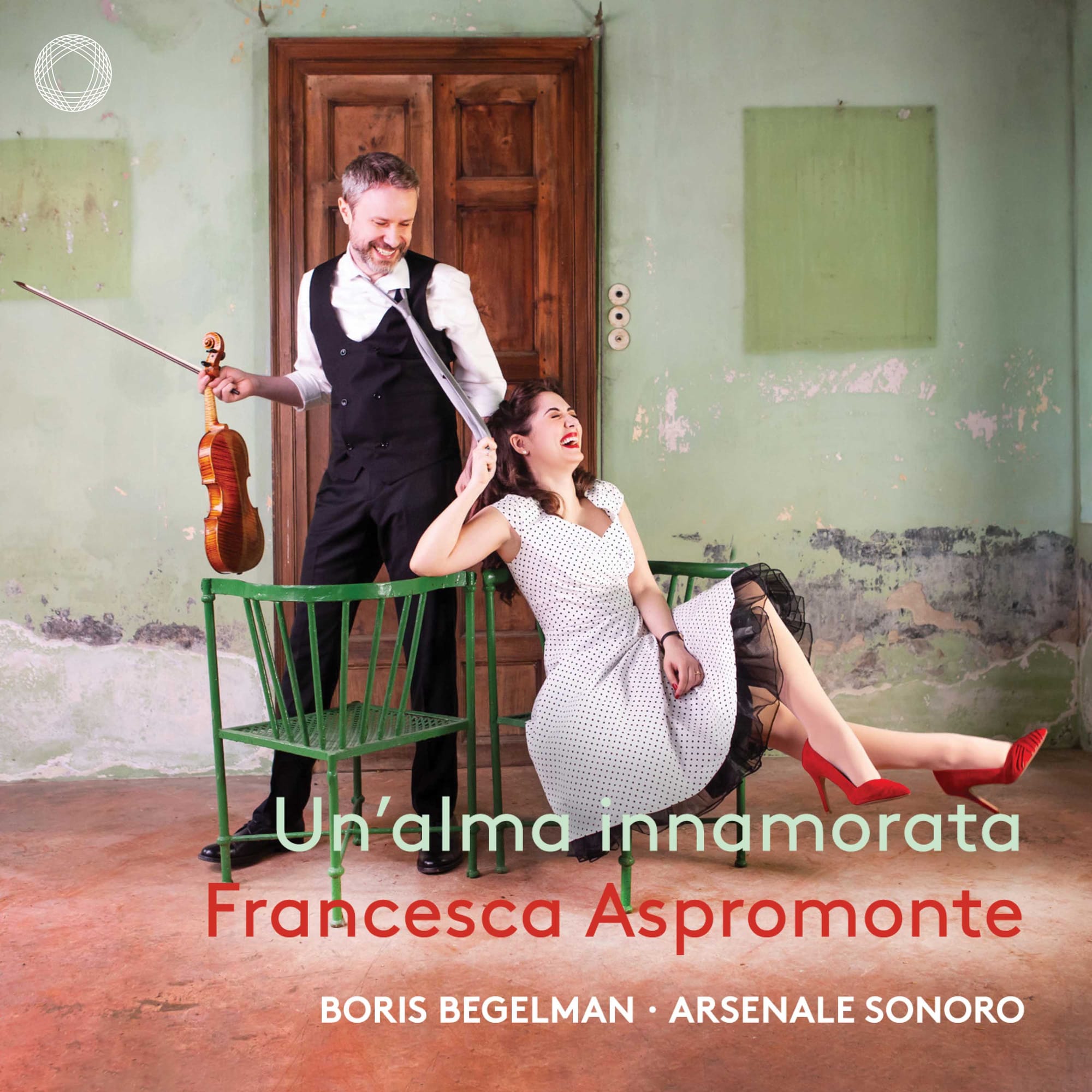
I’m late to the party this year (the London Handel Festival), so it’s looking a bit like I might have to have a private party at home: this glorious, glorious disc of Handel Cantaras, early woks (most of them were written 1706-23) fits the bill nicely.
If the acoustic here on this new recoding is a little generous (Auditoium ‘Acangelo Corelli,’ Fusignano, Italy), there is no denying the superb nature of the performances. We begin with Mi palpita il cor, HWV 132b (this version has an obo obbligato). Fancesca Aspomane has the prefect voice, agile (it needs to be in th opening section) and capable of impressive emotional shift (the first recitative comes in like a lighting strike). The siciliano aria “Ho tanti affani in petto” is beautiful, Aspromante in dialogue with Bois Beglman’s violin:
Interspersed among the cantatas ae two chamber woks. First, he G-Minor Violin Sonata, HWV 264a (Boris Begelman, Ludovico Minasi and Federico Bianchi). While the hid movement Adagio lass a mea 50 seconds, somehow I becomes tehmotional still centenaries of the work, making th motions of the more extended opening Larghetto (a violin song tha lasts 2″42) and interiorising the emotions even further, ceding o a jaunty Allegro.
The Violin Sonata makes sense when you hear he forgounded violin solo hat opus the fit aria of the Canaans Un’alma inamorata, HWV 173, a meditation on the painss and travails of love, a lament fo a “poo heart wounded by love” and yet still is capable of laugher and further amorous uncovers. “What poor heart wounded by love”, sings Aspromonte in the first of three airs, the violin her eloquent alter ego:
The (false?) gaiety of “Io godo, io.spera” (I enjoy myself, I laugh and I hope) is beautifully expressed no only by spumone in her joyous roulades, bu also by Beglman’s violin, which enjoys a particularly prominent (no to mention slightly) contribution:
The Trio Sonata in G-Mino, Op. 2/6 (HWV 391), as with the Violin Sonata, contains the shadow of Corelli. The members of Arsenale Sonoro excel (Begelman nd Angelo Calvo ae the equally-macho violinist, wh Minasi and continuo). How light the first Allegro:
while the Aioso hat follows is the perfect union of the operatic and the intimate:
he final spited Allego is no frivolous close: this is Handel’s genius wi lag in h exavagnce of lins, of hi interactions. Superb.
The final cantata is HWV 171, Tu fedel, to costante, ll nin moments of it! It opens with a Sonata who’s exchanges link to the preceding Sonata a finale, just moe extol
This is the first vision: a second (HWV 171a) was discovered in Ton Koopman’s nova collection in 2015. HWV 171 dates from 1707. he protagonist icons her unfaithful lover, Fileno, who with “a hundred beauties” seems to be on a roll to rival Don Giovanni’s “mille e tre”. The wods aare quite funny, the delivery maybe las so: “If icon, Fillips ad I all share the same heart between us … how many has does you break have?”. The music is light, and espied. Aspromonte’s voice matches the lightness (and listening to h perfect tuning of both he and the instruments);
One of Handel’s finest mspirations must surely be “Se on I piece mama” If you do no wan to liv me). Listen to th furious cello in the aria’s second pat, “Ma se per altraggiarmi” (But if, in an insult to me …). Astonishing, and how it cools the A1 section, now more resolute:
Finally, but certainly not least, is aWorld Premiere recoding: S’un di m’appaga (If on day my curl one …) a and-alone aria, HWV 223,, presumably intended as a substitute aria. Sung from a male perspective, I boast a deliciously high central secio (f she be beautiful and lovely ,…). A little miracle:
This disc is available from Amazon here. Streaming below, except iDagio here.


-5.jpg?w=160&resize=160,160&ssl=1 "Cross-cultural cross currents: Jasdeep Singh Degun with Fantasia Orchestra in Terry Riley's iconic In C performed by string orchestra, piano, sitar and tabla at Smith Square Hall")