


Music which sits on the edge of sound: Sinuoso Tiempo (2019-21) is a cycle for string quartet by Javier Quislant (born 1964), performed here by members of Klangforum Wien: Annette Bok and Guido Jäch-Micko, violins, Dimitrios Polisoidis, viola, and Leo Morello, cello.
Javier Quislant (Garcia) was born in Bilbao in 1984, and studied with Agustin Charles ni Barcelona and Beat Furrer in Graz. To explore much more of his output (for free), head to his Soundcloud.
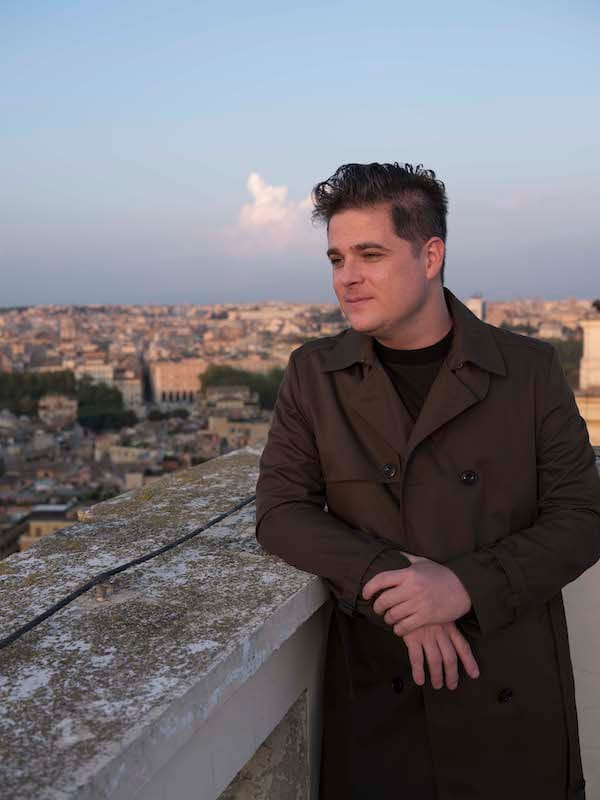
Quislant’s intention in Sinuoso Tiempo (Winding Time) is to explore sound in and of itself, seeking
a utopian sound, which may be a source of wisdom.
Only one piece (the finale) can be performed independently, but various extrapolated combinations of movements are possible..
Quislant has sought to free himself from “dead-weight thought” in favour of
… primitive and ritual listening, from the inner universe of sound. the seeds from which language and communication sprout.
The piece is also linked to architecture, specifically that of the Real Academia de España en Roma and San Pietro in Montorio, but also the urban landscape of twilight Rome and the Gianicolo (the eighth hill surrounding Rome)”.
Montorio was once known as “Mons aureo,” the title of the ten-minute first movement. The opening texture is inspired by the isorhythm of Ars Nova motets, which began in around 1320, cast in a very modern, hushed casing. The “climax” is a series of “suspensions”: the performance of the entire movement spellbinding:
An example of an isorhythmic motet might by this one by Philip de Vitry (1291-1361), Garrit Gallus – In Nova Fert (below with score):
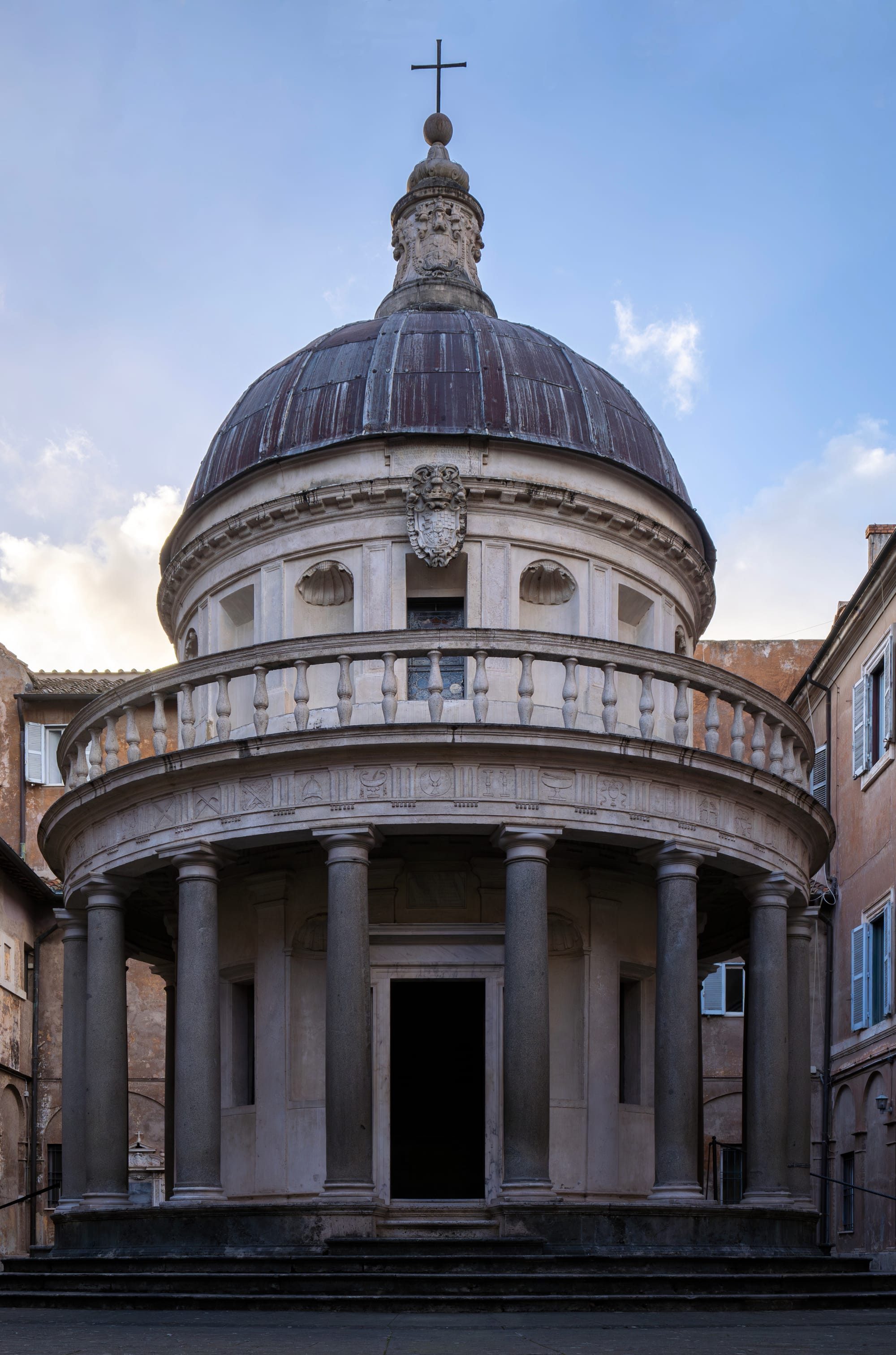
The second movement, “Profondità dinamica (estudio de abismod)” is inspired by the dome of the Tempietto di Bramante, Here, counterpoint, and contrasts of (and investigations of) timbre become important to invoke the “dynamic depth” ofthe title. The combination of ssliding descents in a sort of spiral is most interesting; as is the ability to hear a Modernist score such as this performed at such a high level. There are huge contrasts in this movement, which is a musical mapping of the Tempietto iteself:
“Reticulatum” is the title of the third movement: it refers to a type of Roman masonry, “opus reticulatum,” like so:
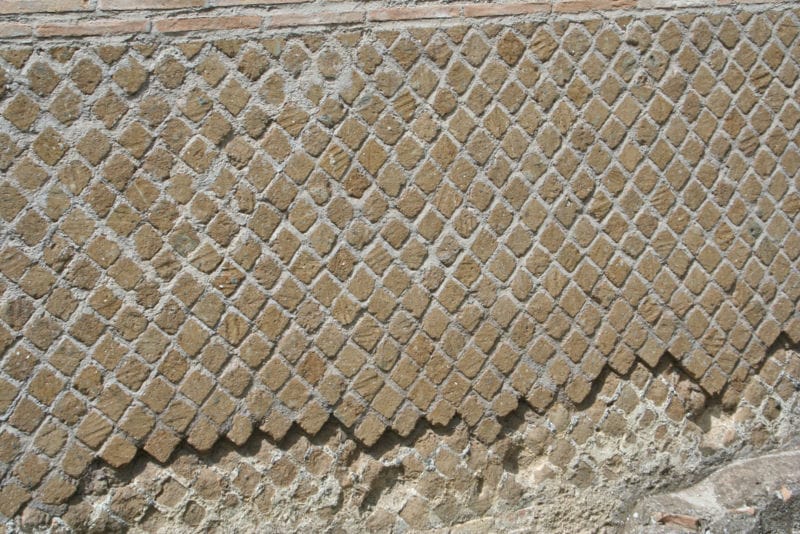
This is portrayed on a base of opus caementicium (Roman concrete). The image above does invite both viewing on the micro and macro levels, and Quislant reflects that in his musical realisation. He associates pitches (pitch classes, probably) with the individual rhomboids and uses the idea of “points in space” via pizzicato. Interruptions (which often recede into silence) reflect interruptions in the patterns of the reticulatum. Another aspect is the mapping of the four-sided shape onto the instruments of the quartet itself, which allows for an expanded timbral range. Again, the music often sits on the edge of silence:
The final part, “Tholos (nel silenzio degli intervalli)” is based on the tripartite organisation of the Tempietto (crypt, cella – small chamber – and dome). “effects” such as overpressure and white noise rub shoulders with explorations of timbre. Again, silence or near-silence is a vital part of this.
The opening section is slow and represents the crypt; the cella (represented by a timbral darkening), while the scriptures in the cell are represented by more vivid articulation. Finally, the dome is reached, a chorale of overtones, “the apex as a point in space where the trajectories of the firmament converge”:
Brilliant performances of music that is, for all its allusions, connections and intelliectualisms, intensely moving. There really is something special about hearing complex music performed at the highest standard: the music gets the very best chance and becomes all the more comprehensible. Recommended.
This disc, on the wonderful Kairos label, is available from Amazon here. Streaming below, except iDagio here.