


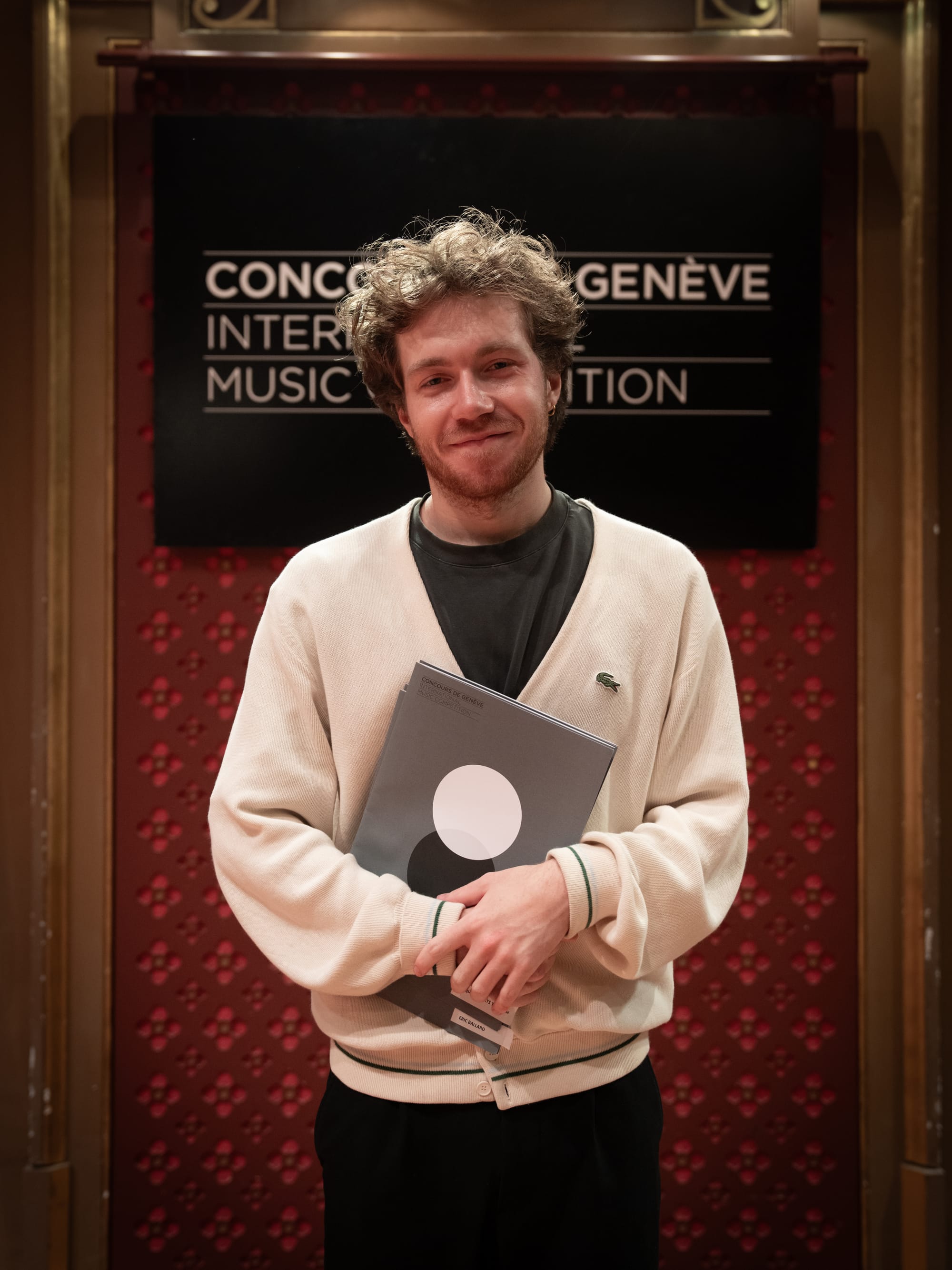
Concours de Genève 2026 II: Conducting Final (Part 2). Orchestre de la Suisse Romande. Victoria Hall, Geneva, Switzerland, 11.11.2026
Conductor Mats Thiersch:
Richard Strauss Don Juan, Op. 20.
Conductor Gabriel Pernet:
Stravinsky L’Oiseau de Feu, Suite (1919).
Conductor Jacobus de Jager:
Prokofiev Romeo & Juliet, extracts from Suites Nos. 1 & 2.
The Friday final, and a change of order: Mats Thiersch was up first, with Richard Strauss’ Don Juan, Op 20.
For the conducting side of the finals, there were 168 applicants this year, representing 33 nationalities, with 24 in preliminary rounds last year. The conductors in the final have worked with four orchestras over two years: that of the Haute École de Musique de Genève, the Orchestre de Chambre de Genève, contemporary specialists Ensemble Contrechamps, and the Orchestre de la Suisse Romande.
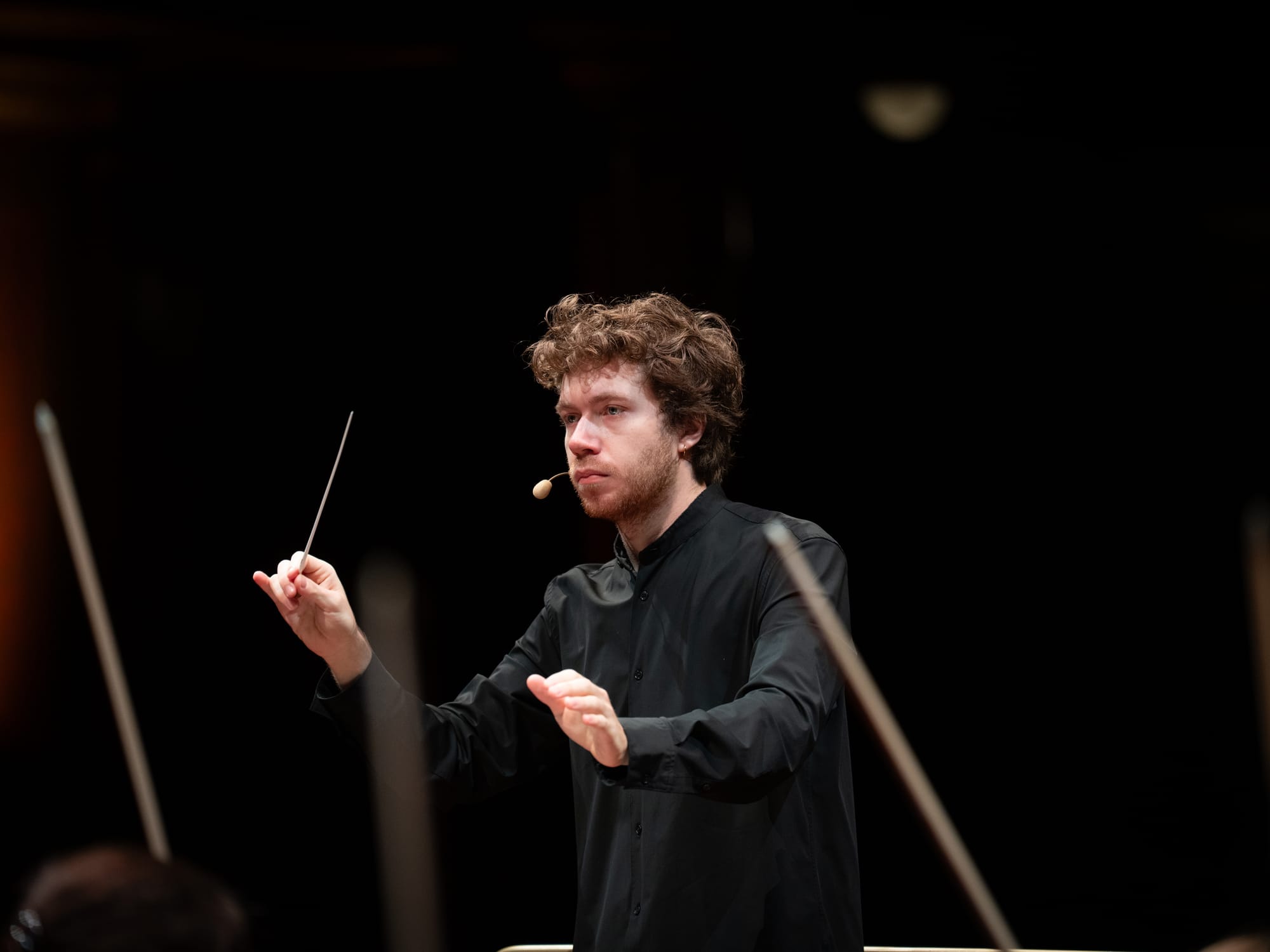
23 year-old, Berlin-based Mats Thiersch is assistant to Petrenko at the Berliner Philharmoniker (a conducting fellow in the Karajan Academy) , previous to which he studied with Alain Antinoglou at the Paris Conservatoire. and has conducted the Orchestre National de Lille. He has several debuts ahead, including with the Rotterdam Philharmonic. He is also a competition winning composer.
Thiersch’s ultra-clear upbeat to that infamous opening to Don Juan paid dividends: the uprush was nicely together. Thiersch has a beautiful conducting technique, expressive and clear – perfect for Richard Strauss. He encourages the orchestra to great warmth, but still allowed so much detail through Perhaps the odd bit of highlighting was over-emphasised (the bassoon in a linking passage), but this was eminently Strasusian. But there was something of an energetic sag at times.
Some of the balancing in the broadcast is different than in the hall (some harp spotlighting, for example), but the main problem was structural – the line was too loose before the great unison horn entry, which meant the “great moment” lost power. Not all was ultra-tight towards the end, but this was an impressive Don Juan. overall.
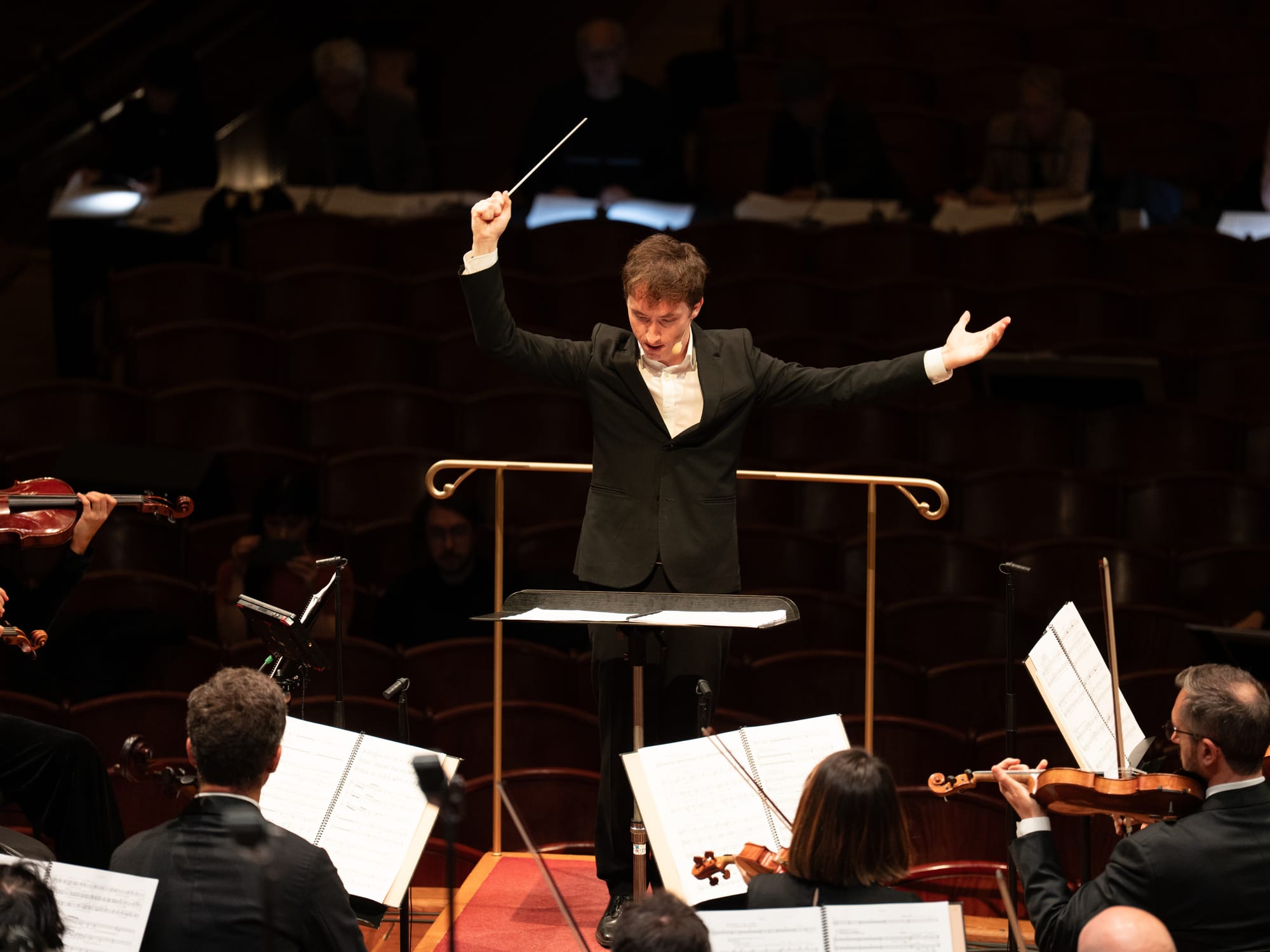
So to Swiss conductor (from Bex) Gabriel Pernet, assistant to Sir Simon Rattle at the Bavarian Radio Symphony Orchestra as of just six weeks ago at the time of writing, via the Rattle Conducting Fellowship. He is also assistant conductor at Orchestre Philharmonique Royal de Liege (OPRL, to Lionel Bringuier). He has also worked with Tonhalle Zürich, and the Lausanne Chamber Orchestra. Pernet is originally a clarinettist – he also paid tribute to the Competition for offering a masterclass with Daniele Gatti and, for contemporary music, with Pascal Rophé, and to conduct the Ensemble Contrechamps in Ligeti and Chin.
The opening of Firebird, the Introduction, was conducted in six, with lots of woodwind detail. Parts felt somewhat literal, though; in contrast, “The Firebird and its Dance” was gossamer-light. Pernet’s greatest strength in this Stravinsky was in the chamber music-like quieter moments – there was real tenderness here in the Princess’ khorovod; and a nice contrast to the “Infernal Dance,” the latter full of risks (not all of which paid off). Pernet does let his musicians “speak,” though – the bassoon and oboe solos of the mesmeric Lullaby a case in point.
There was some terrific preparation for the horn solo that opens the last movement, itself well delivered with tasteful vibrato from the OSR principal, But gesture is at the heart of the finale, and there was a massive missed opportunity – the horn whoops (glissandi) that garland the orchestra were almost entirely missing, both in concert hall and on broadcast.
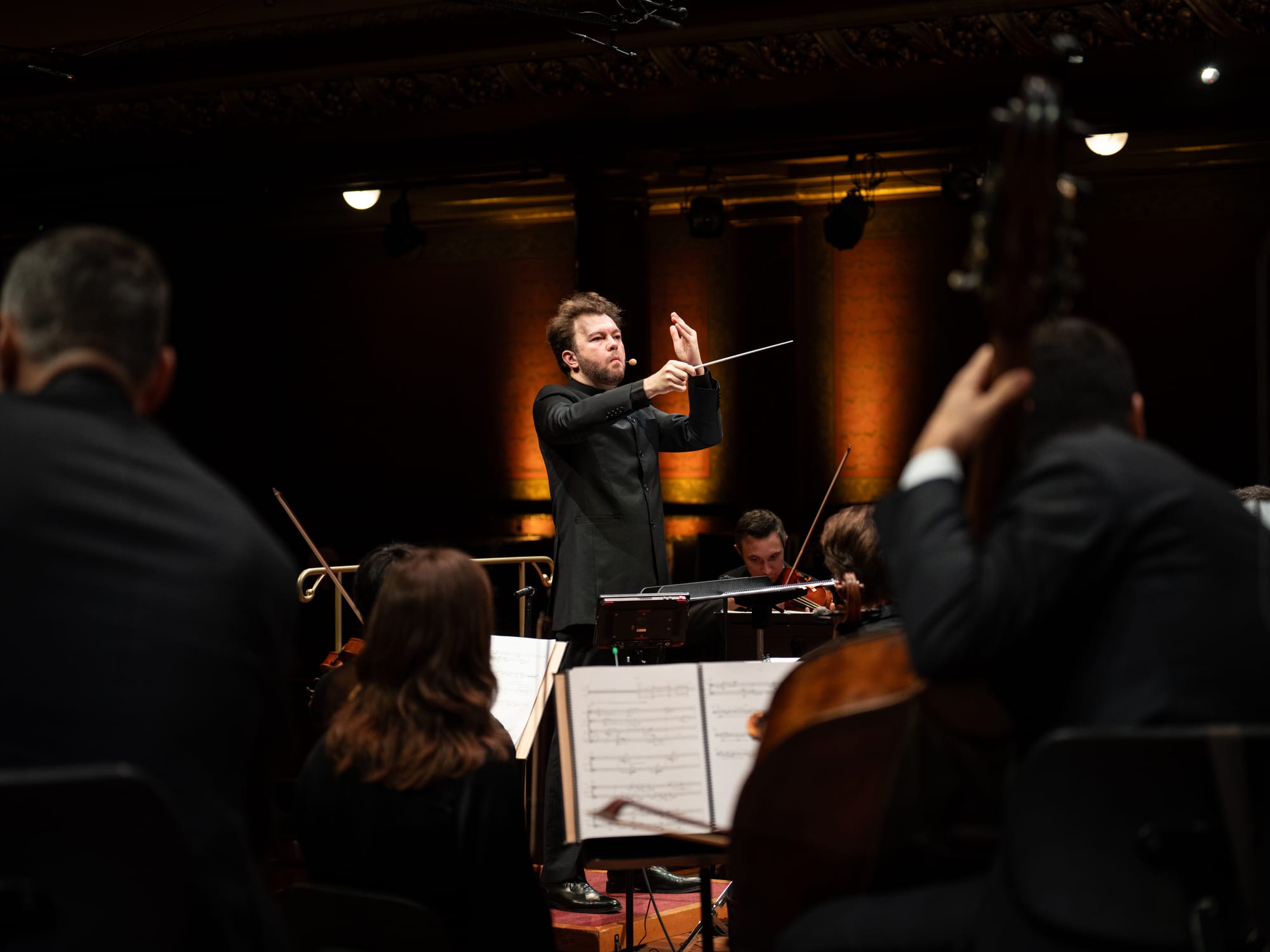
Finally, 29 year old South African, UK-based Jacobus de Jager and four excerpts from Prokofiev’s ballet Romeo and Juliet: “Montagues and Capulets”, “Romeo and Juliet (Balcony Scene),” ”Death of Tybalt,” and “Romeo at Juliet’s Grave,” creating a quasi-symphonic shape with slow finale.
de Jager has just finished his RNCM Fellowship with a concert with Manchester Camerata. He has conducted at the Lucerne Festival and at Jukka Pekka Saraste’s Fiskars Summer Festival. He is an Royal Philharmonic Society conductor in partnership with the Royal Northern Sinfonia.
Nice to see de Jager conducting without baton – the aggregate chords of the opening to the “Montagues and Capulets” ceding to the icy suspended strings was terrific, and his tempo for the main body of the movement, brisk and appropriate. The contrasting flute solo decorated by string sighs, was lovely, a slow processional. Finely-honed tenderness lay at the centre of the “Balcony Scene,” juxtaposed with an awareness of balletic gesture. It was the sense of colour that pervaded this reading that was so impressive. “Death of Tybalt” was a powerhouse, the final”Romeo at Juliet’s Grave” intensely powerful, at both ends of the dynamic spectrum.
To hear such great music performed so ardently by three very different conductors was a real privilege.
So to the results:
Mats Thiersch won First Prize, to the tune of CHF 20,000. Jacobus de Jager took Second Prize, and Gabriel Pernet, Third Prize.
Other, Special Prizes announced on the night included:
- Audience Prize (CHF 1,500) – won by Gabriel Pernet
- Young Audience Prize (CHF 1,000) – won by Mats Thiersch, chosen by students at Geneva’s public and private schools
- Students’ Prize (CHF 1,000) – won by Gabriel Pernet, awarded by students from the Faculty of Music and the Department of Musicology of the University of Geneva. The prize is offered by Ms and Mr Hervieu-Causse
- Rose-Marie Huguenin Prize (CHF 10,000) – awarded to all three Conducting finalists to support a project of their choice, administered by the Concours de Genève
- OSR Musicians’ Prize – awarded to Mats Thiersch by the musicians of the Orchestre de la Suisse Romande, for a concert engagement with the orchestra within the next two seasons
- HEM Orchestra Musicians’ Prize – awarded to Gabriel Pernet by the musicians of the HEM Orchestra, for an engagement to conduct the orchestra in the 2027-28 season
- Éric Ballard Foundation Prize (CHF 3,000) – won by Mats Thiersch for commitment to and interpretation of the contemporary work performed in the Final
- Etrillard Foundation Prize (CHF 5,000) – awarded to Jacobus de Jager for an outstanding artistic project presented at the professional workshops in September 2026. The Foundation will support the realisation of the winner’s project.
- Semi-Finalist Prize (CHF 3,000) – awarded to the three semi-finalists: Alejandro Cantalapiedra (you can hear his first round – from the 79th competition – here – and his semi-final here), Simon Schmied (first round here, semi-final here) and Leonard Weiss (first round here, semi-final here) who were not selected to advance to the Final
Cover photo of Mats Thiersch © Anne-Laure Lechat