


A Poppea for the ages
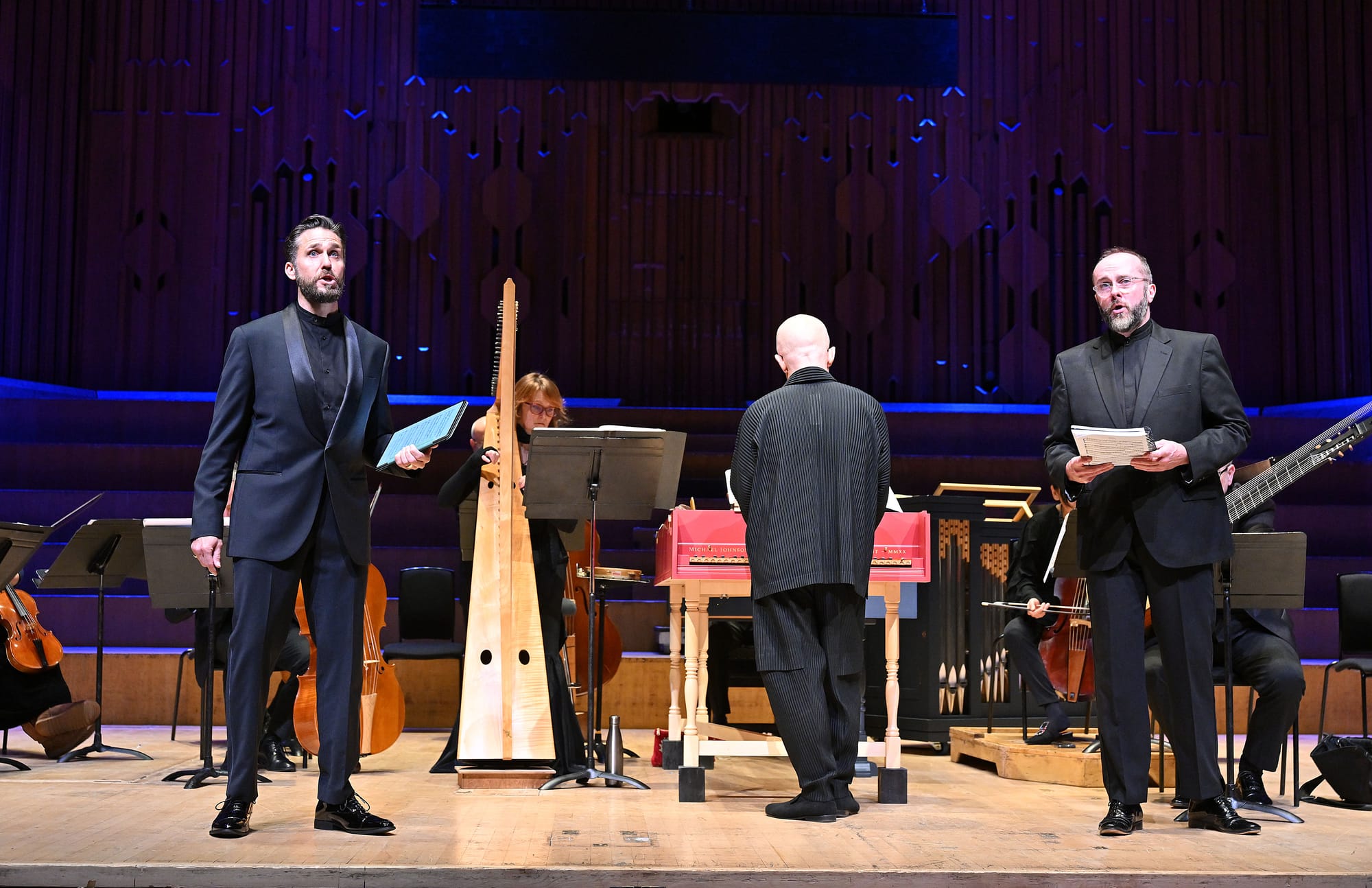
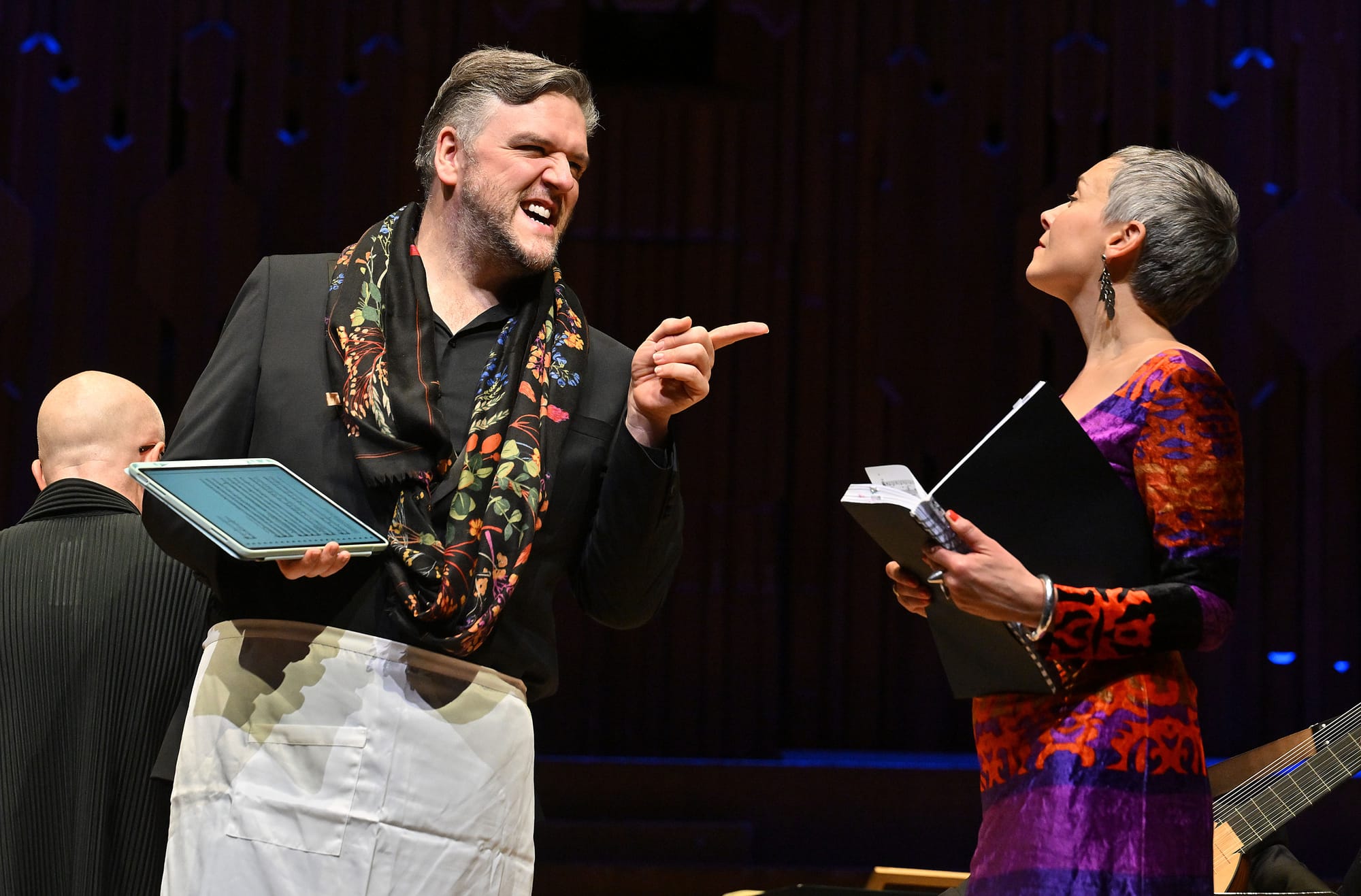
Some dozen years ago, the Academy of Ancient Music presented Monteverdi’s epic L’Incoronazione di Poppea at the Barbican, then directed by Robert Howarth and with no overlap of soloists (Lynne Dawson was Poppea, Sarah Connolly as Nerone, Matthew Rose Seneca ….). It was also definitely ‘semi-staged’; here, Laurence Cummings presented broadly a concert performance with costumes (particularly amusing for the apron of Stuart Jackson as Arnalta) which occasionally used the fuller space of the auditorium (two of the prologue characters entered – arguing – via the aisles, the third opting for the door at the back of the auditorium, for example). But the singing in this most recent incarnation of Monteverdi’s masterly score was finer across the board – soloists were expertly chosen – with a couple of absolute stand-outs.
This performance was turbo-powered by the Academy of Ancient Music’s players, all eleven of them (two violins, two violas, one bass violin, one viola da gamba, one violone, two theorbos, one player, Ashok Gupta, doubling harpsichord and organ; led by a standing Laurence Cummings from the harpsichord). From this, Cummings fashioned the most varied of sounds, as pliable as I have ever heard in this repertoire, and perfectly reflecting the many changes of mood in Monteverdi’s score. This is, after all, his last – it comes just a couple of years post-Ulisse (1640), both of which were written decades after Orfeo (1607; nice we have Poppea so soon after Glyndebourne’s Orfeo this year). With an evening lasting almost exactly three hours (with an interval during the second act), this was a very full version of the score. The piece also requires this pliability of delivery: it moves, often quickly from the serious to the buffa.
The pacing of delivery of text was meticulous throughout – right from the Prologue, with the brilliantly matched voices of Bray, Danni O’Neill (La Fortuna; she also took on Pallade and Damigella) and Rachel Redmond (equally impressive as Amore, and Venere). There is an art to matching voices not only to roles, but to overall casts, and this performance had it to a tee.
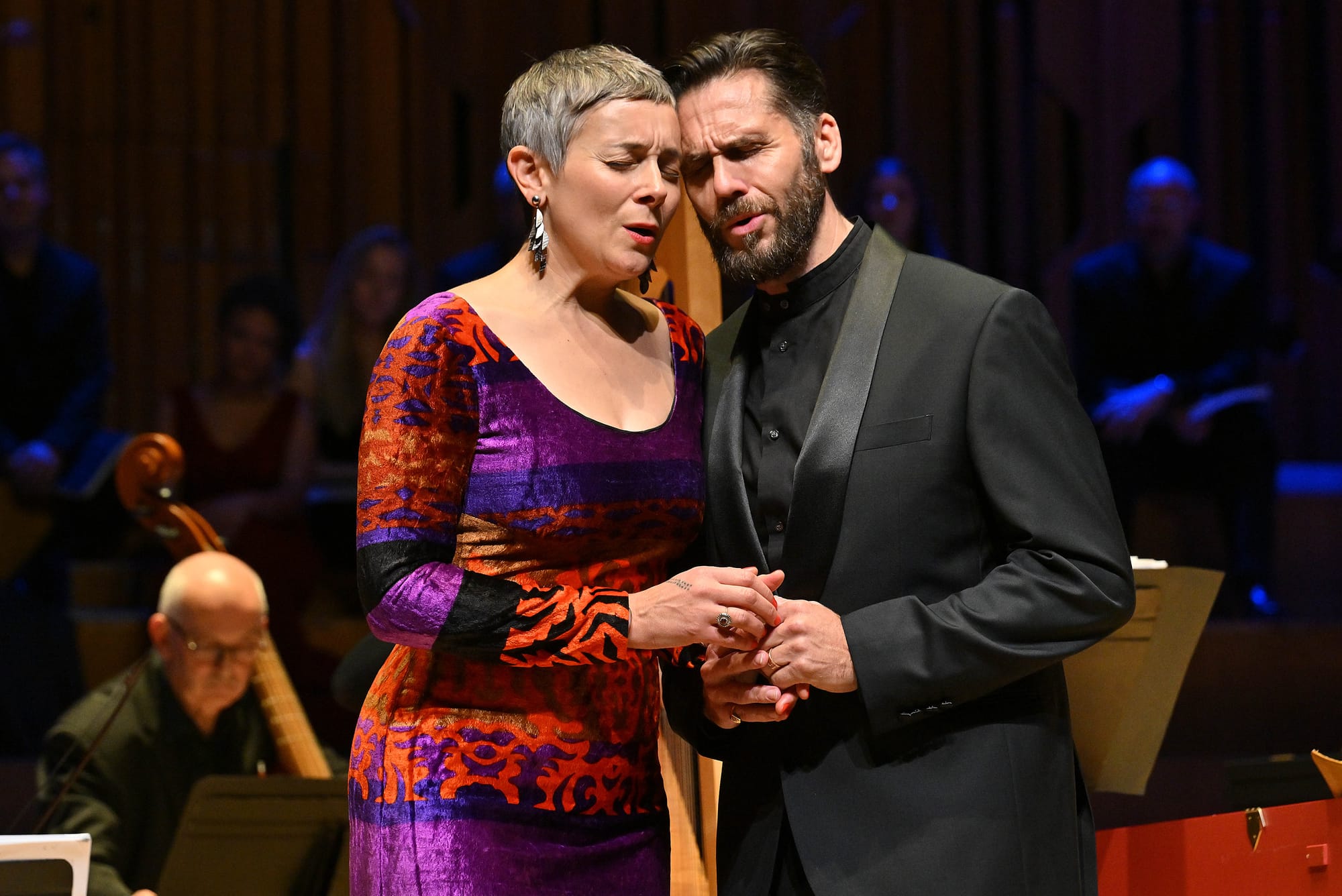
Anna Dennis was the Poppea, sculpting and living every phrase. The role felt perfectly lived-in. It is impossible to highlight a performance of such stature, but perhaps if forced, it would be the end of second act ‘Or che Seneca è morto’. This was a Poppea with a tenor Nerone (Ed Lyon) and counter-tenor Ottone (Christopher Lowry). It would have taken a truly great Nerone to match Dennis’ Poppea, but what we had was ‘merely’ an extremely fine one; he seemed a little less inside the role generally. That said, the final duet (‘Pur ti miro’) was infinitely touching, and Poppea’s act one ‘La legge è per chi serve’ (better known as ‘The empire is divided’) in which he states that “heaven belongs to Jove,’ was superb.
Christoper Lowrey was perhaps a touch quiet at the opening of his assumption of Ottone, but the assumption grew, and quickly, while Stuart Jackson absolutely threw himself into the role, moving easily from comedy to a stunning lullaby in act 2 (‘Dormi, Poppea’).
Nahuel Di Pierro had already hinted that the role of Seneca fits him like a glove in his performance of ‘Amici, è guinta l’hota’ on his album Fra l’ombre e l’orrori with Ensemble Diderot and Johannes Pramsholer on Audax, and his full assumption of the role did not disappoint. This was authoritative and full of presence, the other stand-out performance alongside Anna Dennis.
Doublings worked well throughout, with Katie Bray’s vivid Ottavia and La Virtù; Ottavia’s anger aria in act one, ‘Disprezzata regina’ (Despised queen), as she laments Nerone’s abandonment of her for Poppea, was one of the evening’s many highlights; as was, for that matter, her great farewell aria, ‘Addio, Roma’ as she is banished from the city.
The Drusilla of Maryam Woolal, a singer currently on the opera course at the Royal College of Music, points forward towards a fine career: what an opportunity this was, graciously and ardently taken, agile in ‘O felice Drusilla’. And Rachel Redmond excelled as both Venere and, towards the end, as a firm Venere (Venus, and as Amore in the Prologue)
Occasionally, very occasionally, there was a touch too much vibrato (Lucano, Thomas Walker). But really one could hardly wish for a better Poppea, musically. And wonderful to see Fiona Kimm acting her socks off as Nutrice, Poppea’s nurse and confidante.
It is not only solo contributions that matter, of course, as the final duet proves. But here is also the trio in act two, ‘Non morir, Seneca’ (Don’t die, Seneca) sung by his three ‘Famigliari,’ here Rory Carver, Richard Latham, and Robert Macdonald in perfect balance: each of the three doubled roles, with Latham also Liberto, Carver both Valletto and second soldier, and Macdonald Littore and Mercurio, each a vocal shape-shifter of the first echelon.
This was effectively a masterclass in Monteverdi performance. An unforgettable evening.
L’incoronazione di Poppea (1642/3)
Music: Claudio Monteverdi. Libretto: Giovanni Francesco Busenello.
Cast:
Poppea – Anna Dennis; Nerone – Ed Lyon; Ottavia & La Virtù – Katie Bray; Ottone – Christopher Lowrey; Seneca – Nahuel Di Pierro; Arnalta – Stuart Jackson; Drusilla – Maryam Wocial; Amore & Venere – Rachel Redmond; Nutrice – Fiona Kimm; Lucano & Primo Soldato – Thomas Walker; Valletto, Secondo Soldato & Coro del Familgliari – Rory Carver; Liberto & Coro del Familgliari – Richard Latham; La Fortuna, Pallade & Damigella – Danni O’Neill; Littore, Mercurio & Coro del Familgliari – Robert Macdonald
Academy of Ancient Music; Conductor – Laurence Cummings.
Barbican Hall, London, November 17, 2026