

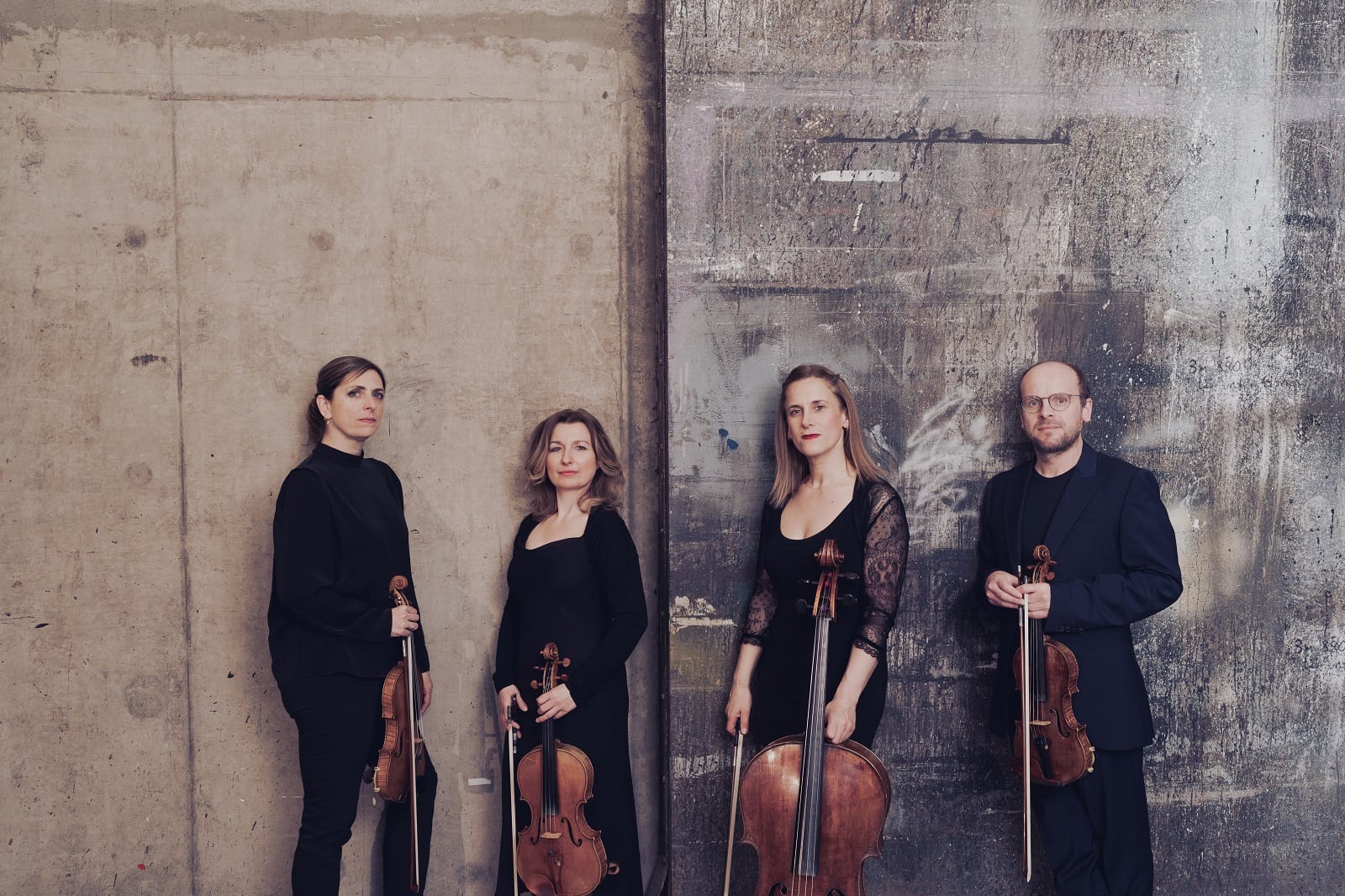
ENSEMBLE 360 . Crucible Playhouse, Sheffield, 19.05.2026
Beethoven Violin Sonata No. 5 in F, Op. 24, “Spring”. String Quartet in C minor, Op. 18/4. Septet, Op. 20.
After the challenging but infinitely enriching Beckett/Feldman concert the previous evening, an afternoon of purest joy: three different sides of Beethoven: the sophisticated dialogues of the Violin Sonata, Op. 24 (“Spring”); the familiar C-Minor dynamism of the fourth of the Op. 18 Quartets; and finally, the outdoorsy, fresh delights of the rarely-heart Op. 20 Septet.
First, Benjamin Nabarro and Tim Horton in the “Spring” Sonata, continuing moments of ravishing rapport. Horton seems to play at his best in Sheffield: it feels a notch above the (still excellent) concerts I have heard in Leytonstone. There is a cleanliness to his delivery that is exemplary, complementing Nabaro’s sterling sense of the long line. Hairpins were beautifully done, both as a duo and individually. Perhaps occasionally some of the phrase endings were a touch affected, with a touch too much of a diminuendo, but how much dynamism there was in te opening Allegro ma non tanto; the slow contrast of the Adagio molto espressivo was meltingly done. Here, “gesangvoll” seemed to be the underlying concept, the melodies so rapt as to stretch forward into the composer’s late period. The proportion of melodic violin to piano was perfectly judged from my seat. The music had all the space it needed, but no undue stasis. A playful Scherzo, the cheeky off-beats and exchanges retaining a sense of discovery before the finale eased itself into being, its opening song perfectly contrasted with the more rigorous writing later.
The string quartet combination of Navarro and Claudia Ajmone-Marsan, violins, Rachel Roberts, violin and Gemma Rosefield, cello is a powerful one, as a Razumovsky Second Quartet at St Margaret with St Columba in Leytonstone in early March proved. This Sheffield Op. 18/4 was no less impressive: the minor mode was instantly a signifier of both disquiet and angst. Here. the members of Ensemble 360 themselves played “in the round,” first violin facing viola, second facing cello. The power of this performance lay in its nuance: yes, there was anger, but there was lightness, too. The imitations that open the Andante scherzoso quasi allegretto were given as four absolutely equal voices. Some of the sequences perhaps did not quite work, but a small price to pay before the Menuetto stole in, full of inquisitive exploration and explosive accents, the textures of the rio nicely new-sounding. The finale seethed, but also held dance, leading to a positively manic coda. Fabulous.
Finally, that Septet in E flat for for clarinet, horn, bassoon, violin, viola, cello, and double-bass, very much related to the wind Harmoniemusik that was around at the time. Another circle of players, Robert Plane’s clarinet descent heralding the Allegro conbrio after the opening weighty Adagio (perfectly balanced). But it was Jonathan Davies’ bassoon that shone, the sound ravishing, each solo perfect. Wonderful to have the first movement repeat: the more of this one hears, the better! And how enthusiastic the octaves at the onset of the development. Plane it was who launched the Adagio cantabile with an eloquent song that might have come from Fidelio. Perhaps hand-overs of material were not quite as deft as one might have hoped. NIce to hear the famous Tempo di menuetto (every pianist will know it, too, as the slow movement of the Piano Sonata Op. 49/2). Horn player Naomi Atherton (strangely not listed) was beautifully agile later on in this movement (she launched the penultimate movement, a Scherzo, perfectly, too).
A word for Rachel Roberts’ viola excellence at the beginning of the “Tema con variazioni,” and the sheer character of the clarinet and bassoon playing later on in that movement. The finale brought it all together, the (mild) clouds over the introduction mirroring the opening of the first movement (led by horn, and perhaps related to the slow movement of Beethoven’s Horn Sonata). How the Presto scampered, fast enough to suggest presto without any blurring. And how the ensemble works together, tutti diminuendos perfectly judged.
An absolute joy of a concert.


%20Richard%20Hubert%20Smith.jpg?w=160&resize=160,160&ssl=1 "Modernising Gluck: English Touring Opera's new production of Orpheus and Eurydice puts a distinctly contemporary spin on the work")